Protection of the head at work
A vital guide for Mexico
Head protection in the workplace. Occupational safety is a priority, and head protection is essential to prevent serious accidents. In this article, we explore the applicable safety regulations in Mexico, best practices for using and maintaining head protection equipment, and the different types of helmets available. We also review how proper training can make a difference in preventing injuries.
Importance of head protection
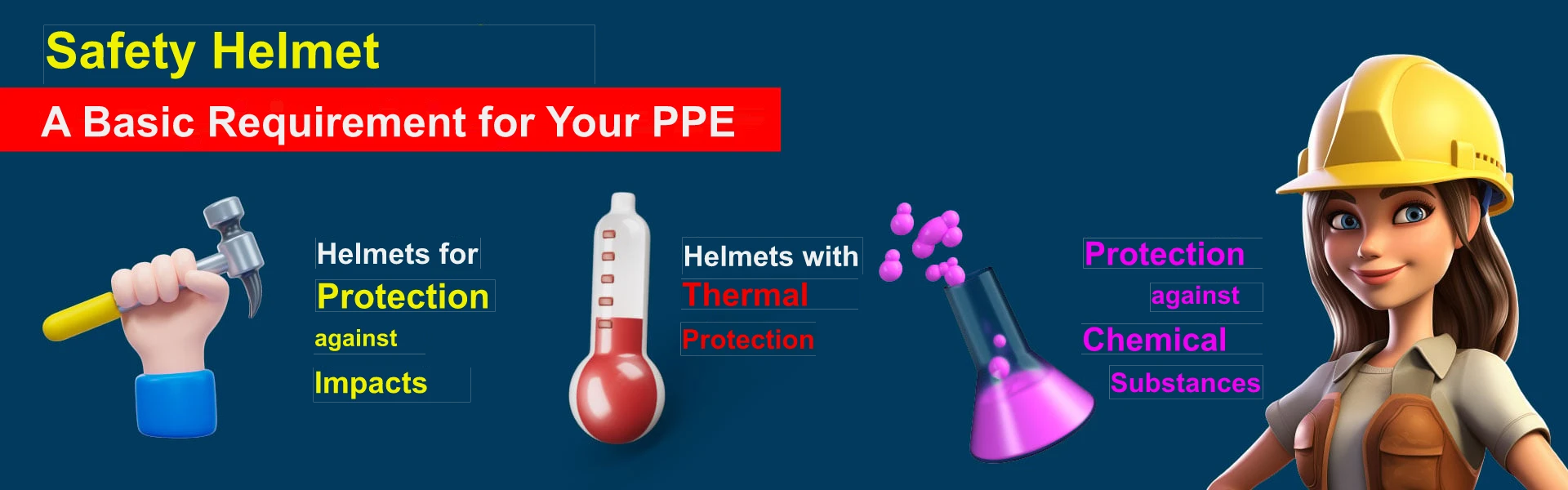
Workers in sectors such as construction, mining and industry face hazards that can cause direct impacts to the head and put their lives at risk. Proper use of personal protective equipment (PPE) is vital. Helmets, for example, are designed to absorb impacts and protect against falling objects, collisions with fixed surfaces and even electrical shocks. In Mexico, the Ministry of Labor and Social Welfare (STPS) regulates workplace PPE use to ensure workers' safety.
What rules apply to Head protection?
OSHA standards 29 CFR 1910.135 and 29 CFR 1926.100 apply to industrial and construction workplaces. Both standards require employers to ensure workers have head protection that meets the required certification. Under both, protection must meet the American National Standards Institute's ANSI Z89.1, which provides general standards for head protection certification. It instructs protection suppliers on the testing procedures needed to meet certification standards. Compliant helmets are properly marked inside, assuring workers that they meet the requirements.
In addition, the ANSI standard classifies different types of helmets and helmets according to their use and protection. All helmets and caps are marked with the appropriate protection class and type.
Finally, the standard states workers must not alter or modify helmets for any purpose, as this reduces reliability.
Safety standards in Mexico
The STPS requires compliance with a number of standards, such as NOM-017-STPS-2008, which establishes minimum requirements for the selection and use of personal protective equipment. To protect your head, it's required to wear certified helmets that meet Mexican Standard NMX-S-055-SCFI-2016, which details strength and durability specifications.
Type and proper use of helmets
Several types of helmets are classified according to the level of protection that offer:
- Class E (Electrical): Resist up to 20,000 volts.
- Class G (General): It protects up to 2,200 volts.
- Class C (Conductive): No protection from electrical risks but ideal for mechanical blows.
They are also divided into:
- Type I: They protect against vertical impact (fall of objects).
- Type II: They protect from both vertical and lateral impacts.
Protection of the head at work
Training and maintenance of equipment
Regular maintenance and training in correct helmet use are essential. Workers must inspect their helmets before each use, looking for cracks or deformation that could compromise their effectiveness. Proper PPE management includes ongoing training in correct use and updates to safety procedures when new risks are identified.
Conclusion
Head protection saves lives. Both employers and workers are responsible for ensuring the right equipment is used. Ongoing training and compliance with Mexican regulations not only reduce accident risks but also promote a workplace safety culture.
Know about our E-Learning platform Wings E-Training