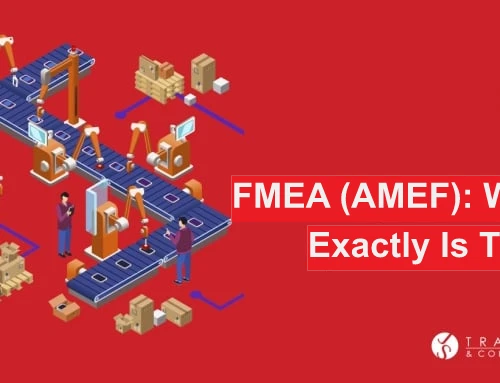
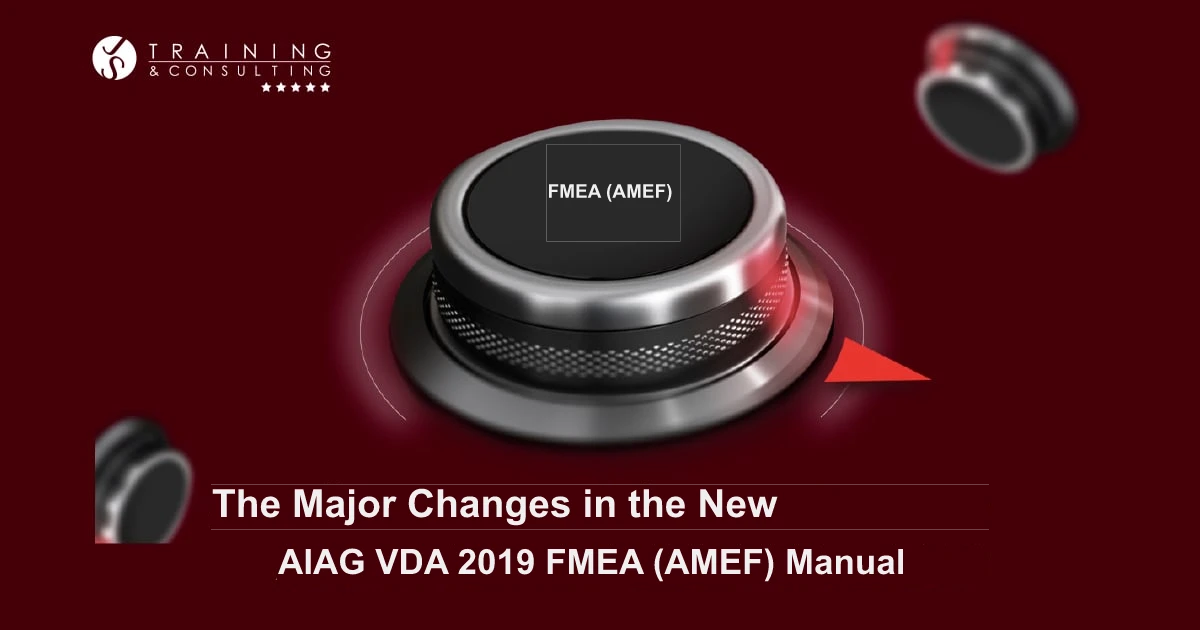
A couple of months ago, specifically on 03 June 2019, after considerable work, feedback and revisions, the new version of the FMEA (AMEF: Failure Mode and Effects Analysis) Manual was finally released.
As you know or may recall, the AIAG and VDA FMEA (AMEF) Manuals were in their 4th edition, but each existed separately. This time, both organizations and their members made a major effort to merge the manuals, to the delight of all their suppliers. They have become a single document using a process-oriented approach to developing Design and Process FMEAs (AMEF) that meet the requirements of both industry groups.
This new manual is not a 5th edition; the merger makes it the first edition of its kind.
And let me tell you that it brings about important and considerable changes in its production.
The first major change is the new approach to FMEA (AMEF) development. Now a 7-step process, it helps produce more robust analysis for thoroughly reviewing risks and how to mitigate them through more precise, relevant and complete technical documentation.
The 7 Steps of the New FMEA (AMEF) Are:
- The definition of scope.
- Structure analysis.
- Function analysis.
- Failure Analysis.
- Risk analysis.
- Optimization.
- Results documentation.
The second major change concerns Risk Analysis. The criteria for Severity, Occurrence and Detection are much more specific when determining their levels, taking into account existing controls, previous experience with similar products and the maturity of the detection method. In addition, the NPR is eliminated and replaced by AP (Action Priority), which combines the three factors to determine whether the required risk reduction actions are High, Medium or Low priority.
The third major change is the inclusion of FMEA-MSR for Monitoring and System Response, a supplement to Design FMEA focused on mechatronic systems. In this FMEA, the assessment criteria change to Severity, Frequency and Monitoring.
As you can see, the changes are significant, and you need to understand how to transition to this new FMEA (AMEF) approach.
What I can assure you is that it will make a much greater contribution to your organizations' risk management.
We already offer the training needed to make this transition and significantly improve your processes. Dare to try!
Leave Your Fears, Live Your Dreams.