Blog. APQP develops to meet new challenges of the automotive industry
The automotive industry faces rapid transformation driven by electrification, automation, digitalization and new technologies. This situation demands more robust planning and control processes to ensure quality from the earliest stages of product development.
In response to these changes, AIAG published the third edition of the APQP manual (Advanced Product Quality Planning) and, for the first time, a independent manual for Control Plan, strengthening the tools used by manufacturers and suppliers to prevent risks, improve traceability and ensure successful launches.
What's the APQP?
The Advanced Product Quality Planning (APQP) It's a structured methodology that allows planning and managing the development of new products, ensuring that the client's requirements are met from conception to mass production.
Its main objective is to reduce risks, prevent defects, and coordinate work across all departments involved in the project.
The five phases of APQP are:
- Programme planning and definition.
- Product design and development.
- Design and development of the process.
- Validation of product and process.
- Feedback, Evaluation and Continuous Improvement.
Why was a new edition necessary?
For more than a decade, the automotive industry experienced significant changes that required an update of this methodology.
The main factors are:
- Increased automation of processes.
- Incorporation of electrical vehicles and intelligent technologies.
- Software integration into products.
- New approaches to risk management.
- Alignment with IATF 16949 requirements.
- Increased complexity in global supply chains.

Collaborative work for the design and development of industrial components.
Main changes in APQP 3rd Edition
1. Greater focus on risk management
The new manual strengthens risk identification, assessment and mitigation throughout all phases of the project.
Organizations should document strategies to:
- Prevent risks.
- To reduce its impact.
- Monitoring actions.
- Keep track till closed.
This approach encourages more preventive and less reactive decision-making.
2. Active participation of leadership
Senior management takes on a more prominent role during project development.
Participation in periodic Gate Reviews is now expected, validating readiness to advance each phase before starting the next.
This improves resource allocation and strengthens strategic decision-making.
3. Supply and supplier management
One of the most important changes is the strengthening of the supplier selection and evaluation process.
Greater follow-up is now incorporated for:
- Supplier Risk Assessment.
- Performance by sub-providers.
- Compliance with requirements.
- verification before launch.
That aims to reduce problems from the supply chain.
4. Performance Indicators (KPIs)
The new APQP incorporates indicator-based management.
KPIs that can be used include:
| Indicator | Objective |
|---|---|
| Schedule Compliance | Project Control |
| Advance of deliverables | APQP Follow-Up |
| Risk closure | Preventive management |
| Status of validation | Preparation for PPAP |
| Compliance with Gate Reviews | Phase control |
5. Formal change management
Any change made during development should be appropriately documented.
Each amendment should include:
- Reason for change.
- Responsible.
- Date.
- Approval.
- Validation evidence.
That greatly improves project traceability.
6. Increased importance of traceability
The traceability stops focusing only on the finished product.
He also now considers:
- Components.
- Raw materials.
- Processes.
- Suppliers.
- production records.
That allows for a more prompt response to any quality incident.
What changes with the new Control Plan?
One of the most important changes is that the Control Plan currently has an independent manual, providing more specific guidelines for its production and maintenance.
The new guidelines include:
- A detailed development of the Control Plan.
- Special characteristics.
- Reaction plans.
- Rework processes.
- Visual inspections.
- Confirmation of poka-yoke devices.
- Control of automated processes.
- Management using software.
Safe Launch
The new methodology incorporates the concept of Safe Launch, with the aim of temporarily increasing controls during production start up.
That may include:
- Additional inspections.
- Increased sampling frequency.
- Special Validations.
- Additional control points.
The aim is to detect deviations before they impact the client.
Comparison: Before vs. Now
| Previous APQP | APQP 3rd Edition |
|---|---|
| Less focus on risks | Comprehensive risk management |
| Integrated Control Plan | Independent manual |
| Decreased participation of leadership | Formal revisions by phase |
| A low direction about changes | Documented change management |
| Limited KPIs | Monitoring by indicator |
| Decreased details about traceability | Extended traceability |
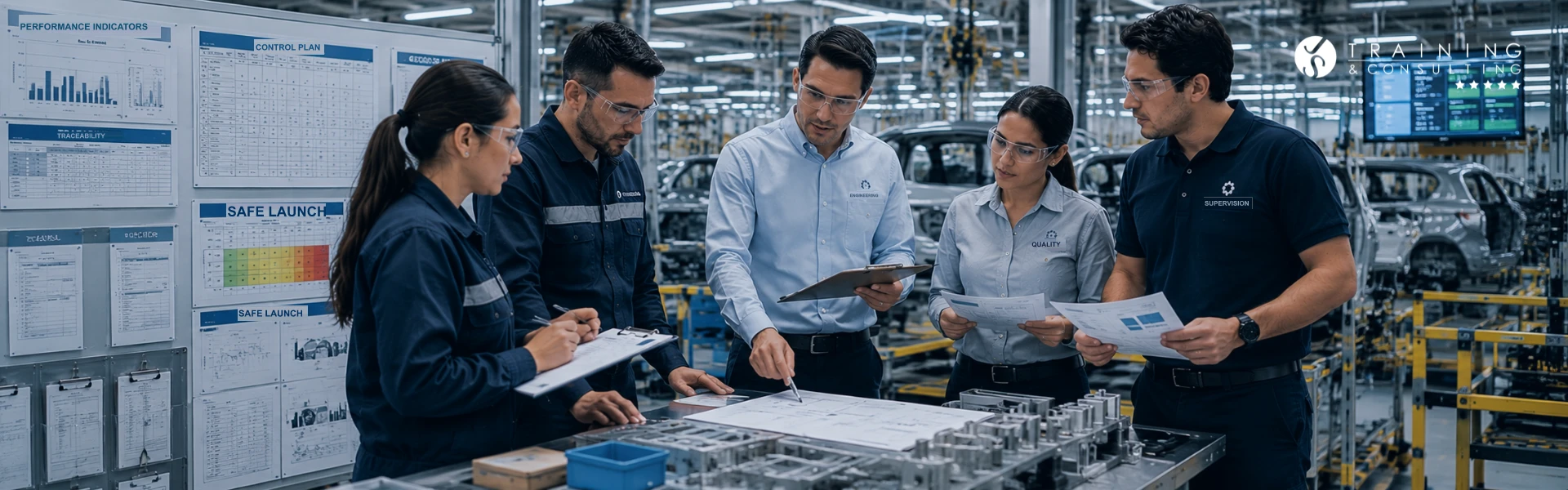
Implementing quality standards directly at production line.
What should organisations do?
To adapt to these changes, it is advisable to:
- Review existing documentation.
- Updating internal proceedings.
- Training personnel involved.
- Review the APQP and Control Plan formats.
- To strengthen risk assessment.
- Implement monitoring indicators for the project.
- To actively involve high-level leadership during programme revisions.
Conclusion: To adapt to change to better compete
The APQP and Control Plan update represents an important evolution in automotive quality management. More than a documentation change, it introduces practices focused on prevention, risk management, traceability and continuous improvement.
Organizations adopting these guidelines will not only be better prepared to meet customer and manufacturer requirements but will also strengthen process reliability and increase the likelihood of successful launches the first time.