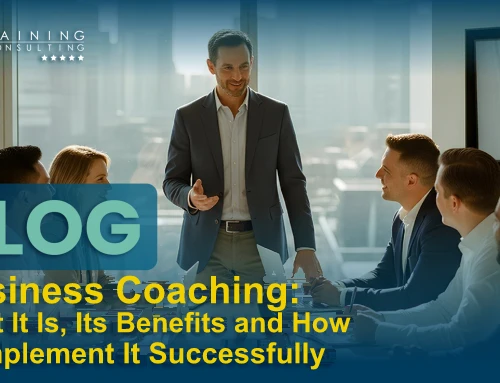

Coaching… as overused as that lovely phrase, “It's not you, it's me.” But do not misunderstand me, dear reader. These days there are coaches everywhere; lift a stone and a coach appears. Now, that does not mean coaching is bad. On the contrary, I think it is a methodology that has been devalued over time, largely through a lack of professionalism among “coaches.” Many have ultimately been unable to explain clearly the benefits of coaching and how it differs from other disciplines. Meanwhile, a previous bad experience with one colleague can undermine the credibility of many others.
First and foremost, we must be clear and objective about this. A coach is not a psychologist. Psychologists have different methods, tools and techniques for exploring people's cognitive structures. However, I believe one of the most significant differences is that psychologists work with participants from the past, while coaches do not: a coach focuses on today and looks toward the future.
A coach is not an instructor either. An instructor uses methods to develop people's competencies, skills and emotional processes, “teaching” through an andragogical methodology—adult education—to help them construct new knowledge based on their experiences, desires, needs and so on. A coach does NOT teach. Drawing on what you know and do not know, a coach helps you develop and realize your full potential. If you reach a point where you need to learn something, the coach gets involved only a little or invites you to find the channels and resources to learn what you are missing.
A coach is not a mentor either. Mentoring involves guidance through a teaching–learning process, for which your mentor must be an expert or have greater experience in certain subjects. In coaching, the coach does not even need to know your professional activity, because they work with techniques and tools drawing on what you alone possess as a person or professional.
Having first distinguished what coaching is and is not, we can discuss its many approaches: life, ontological, business, executive, management, sports, career, vocational, bereavement, functional, holistic, etc. Do they all work? Yes. Are they all for you? No. How do you know what kind of coach you need? It depends on what you seek in life and your short-, medium- and long-term goals.
As executives, you should first understand why you want a coach. Major multinational corporations—Google, Facebook, Amazon and others—are eliminating leadership positions labeled “manager” or “director” and developing those people as coaches. Why? The answer is simple: unlike those traditional roles, a coach seeks to help you reach your full potential personally and professionally, based on who you are, what you think and want, and where you are heading. This supportive process involves a deep bond of challenge and collaboration between coach and coachee.
A coach always seeks the best in you and challenges you to face the fears, problems and processes you sometimes avoid and postpone for no particular reason. A coach’s success depends on your success; their failure is their own, because somehow they failed to support you effectively. A coach encourages you to confront your assumptions and limiting beliefs. But you must be willing to break through them, create a new reality and take responsibility for how far you want to go—for living intentionally.
Dear reader, if your company needs to take frontline leadership further and the old “I’m your boss, so be quiet” approach no longer works, it may be time for a more humane, inclusive model that gives employees opportunities to grow and gain new experiences. Executive coaching is a first step.
Now the objection always arises: “But it is very expensive.” Well, expensive is paying every year for your directors and managers to take a diploma program at a prestigious university to improve skills they already have, while retaining the same mental and cognitive framework, so that afterward they return to the same “I am your father”—I mean, your boss—model. I will end with this: “If you always do what you have always done, you will always get what you have always got. If it works for you, go ahead. If not, it is time to change.” Stay sharp.
Rock´n roll people!