

5 Workplace Climate Indicators
A positive climate promotes commitment and motivation
5 Workplace Climate Indicators. The Labour climate is one of the most important factors in an organization's success. It refers to employees' perceptions of their work environment and directly affects productivity, commitment and job satisfaction. A good workplace climate not only improves employee performance but also attracts talent and reduces staff turnover. In this article, we will explore what workplace climate is, its importance, types of work environment, factors affecting it and how to measure it to improve well-being within the organization.
What's the Labour Climate?
The Labour climate is defined as the set of perceptions and emotions employees experience in their workplace. This includes relationships with colleagues, leadership style, growth opportunities and the physical environment, among other aspects. A positive climate fosters commitment and motivation, while a negative climate can lead to demotivation and poor performance.
What's The Importance of Labour Climate?
Workplace climate directly influences employee productivity, performance and satisfaction. A positive environment builds trust, encourages communication and improves collaboration between teams. Organizations with a healthy workplace climate also tend to have lower staff turnover and attract more committed, talented employees. Conversely, a poor climate can cause internal conflict, stress and low performance.
Main benefits of a good work climate:
- Increased productivity.
- To improve employee satisfaction and commitment.
- Reduction in employee turnover.
- Attracting qualified talent.
- Improved teamwork and communication.
What are the 4 Types of Labour Environment?
The work environment can be classified into four main categories, depending on culture and organizational structure:
- Authoritarian: It's characterized by a rigid and controlled leadership style, where decisions are made in a hierarchical manner. Employees have little liberty and may feel limited.
- Participatory: It promotes shared decision-making and collaboration between employees and management. The views of all members of the organization are appreciated and this creates a sense of belonging.
- Affiliative: Prioritizes personal relationships and employee well-being. Bonds between colleagues come first, creating harmony and mutual support.
- Innovative: This type of environment encourages creativity, innovation and teamwork. Employees are free to propose ideas and participate actively in projects.
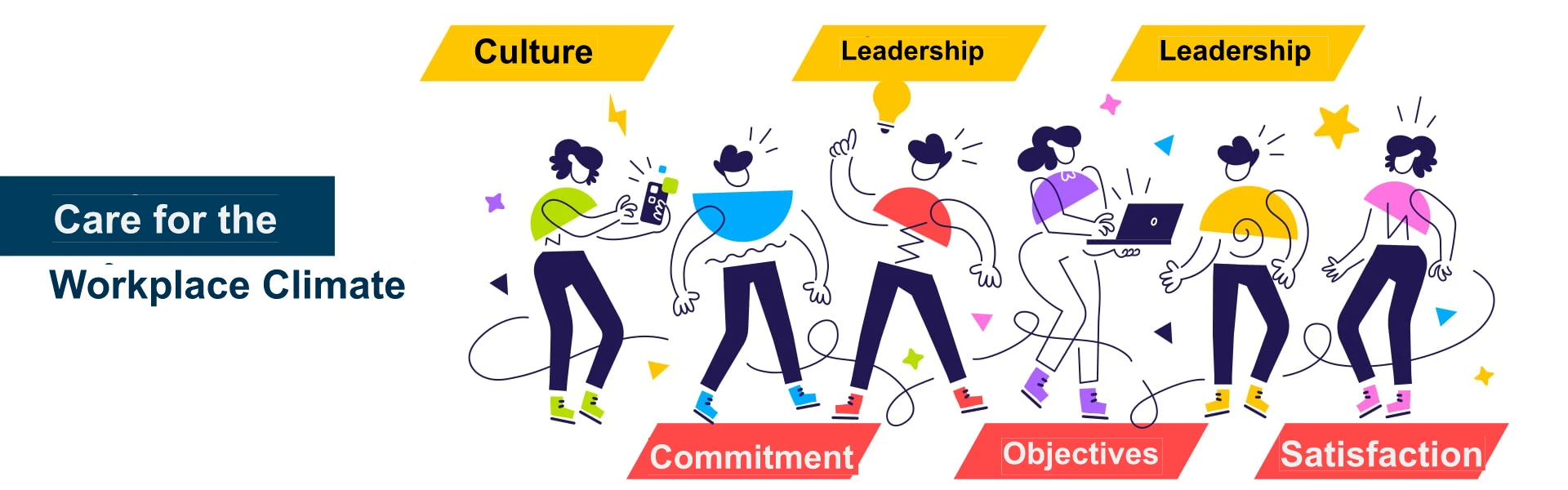
A positive climate promotes commitment and motivation
Which Authors Discuss the Workplace Climate?
Several authors have studied the work environment. Some of the most prominent include:
- Abraham Maslow: His pyramid of needs theory emphasizes the importance of well-being and self-fulfilment in the work environment.
- Frederick Herzberg: In his two-factor theory, Herzberg suggests workplace climate affects both motivators (achievement, recognition) and hygiene factors (working conditions, company policies).
- Douglas McGregor: With his Theory X and Theory Y, McGregor analyzes how leaders’ perceptions of their employees can influence the work environment.
Factors That Affect the Workplace Climate
The work climate can be affected by several internal and external factors, including:
- Leadership Style: Authoritarian or unapproachable leadership can generate stress, while inclusive leadership fosters motivation.
- Internal communication: Clear, transparent communication strengthens trust, while a lack of communication can create mistrust.
- Physical conditions: Workspace, lighting, and ergonomics directly influence employees' well-being.
- Relationships among colleagues: Interpersonal relationships play a crucial role. Teams with good cohesion tend to work more effectively.
- Recognition and rewards: Lack of recognition for work well done negatively affects the work environment, while rewards motivate employees.
5 Workplace Climate Indicators
1. Fostering Open Communication
A healthy work environment is built on an effective communication. Be sure that all employees can express their opinions and suggestions.
2. Recognize Work Well Done
Recognition is a powerful motivator. To congratulate employees for their achievements, both large and small, creates a positive work environment.
3. Offers Growth Opportunities
Providing opportunities for professional development helps employees feel valued and committed. Implement training and growth programs within the organisation.
4. Enhance the Physical Work Environment
Be sure that employees work in a comfortable space with good light and a clean environment. That affects their physical and mental well-being.
5. Fostering Collaboration and Team Work
Implement teamwork exercises and activities promoting cooperation, strengthening employee relationships and productivity.
How Is the Work Climate Measured?
Workplace climate can be measured through surveys and questionnaires assessing satisfaction, communication, leadership and the physical environment. These instruments gather employees' perceptions across different areas, identifying organizational strengths and improvement opportunities.
Example of Workplace Climate Measurement
Imagine a technology company wants to assess its workplace climate because of high employee turnover. It could use an anonymous survey to evaluate job satisfaction, leadership style, interpersonal relationships and workload. After analyzing the results, the company identifies lack of recognition and excessive workload as the main problems. It then implements a reward system and adjusts workloads, thereby improving the workplace climate.
Training, Key for A better Labour Climate
Workplace climate is a fundamental pillar of any organization's success. Investing in a better work environment not only increases productivity but also raises employee commitment and satisfaction. Training and professional development are crucial to this process, enabling employees to develop within the company, feel valued and contribute to a more positive environment.
If you are trying to improve work climate at your organisation, start by implementing these changes and you will see your team’s performance improve significantly.