
What skills do today's leaders need?
In a dynamic, changing business world, the leader's role is more crucial than ever. Today's leaders face unique challenges requiring varied, adaptable skills. From managing remote teams to constant innovation, leaders need the skills to navigate an evolving business environment. In this article, we explore which skills are essential for contemporary leaders and how they can develop them for long-term success.
What is a leader, and what types are there?
A leader is someone who guides, inspires and motivates others to achieve common goals. The figure of the leader can adopt different forms and styles, each with its own characteristics and approaches. The most common forms of leadership include:
Transformational Leadership
This leadership style inspires and motivates followers to reach their full potential. Transformational leaders encourage innovation, creativity and their teams' personal and professional development.
Situational leadership
Situational leadership adapts to the specific needs and circumstances of each situation. Situational leaders adjust their leadership style to the demands of the environment and their employees’ skills and motivations.
Autocratic leadership
In autocratic leadership, leaders make unilateral decisions and exert strong control over subordinates. Although effective in emergencies or under pressure, it can limit team participation and creativity over time.
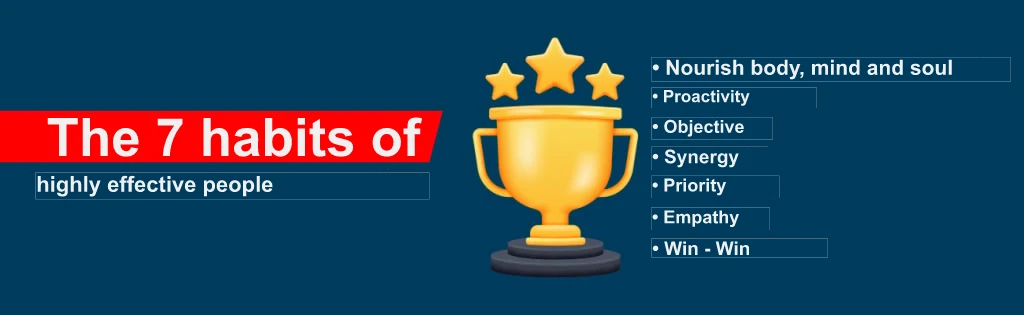
the-7-habits-of-highly-effective-people
Key skills for today's leaders
Emotional Intelligence
Emotional intelligence is essential to understanding and managing our own emotions and others'. Emotionally intelligent leaders inspire trust, resolve conflicts and encourage strong team relationships.
Strategic thought
Strategic thinking involves the ability to anticipate trends, identify opportunities and design effective action plans. Leaders with strategic skills can guide their work teams to achieve long-term goals and stay competitive in a changing market.
Effective Communication
Effective communication is essential for conveying visions, motivating teams, and solving problems collaboratively. Leaders who master communication can inspire trust, build strong relationships, and align their teams around shared objectives.
Flexibility and adaptability
In an evolving business environment, flexibility and adaptability are critical skills. Leaders should be capable of adapting to sudden changes, learn from new experiences and seek innovative solutions to unexpected challenges.
Recommended Reading: “The 360-Degree Leader” by John C. Maxwell
To develop and strengthen leadership skills, John C. Maxwell's “The 360 Degree Leader” offers a comprehensive view of effective leadership. Maxwell explores influence, vision and teamwork, providing practical tools and advice applicable to different organizational contexts.
Conclusions
In summary, today's leaders need a unique combination of skills to face the challenges of an increasingly complex business world. From emotional intelligence to strategic thinking, developing these essential skills can make the difference between success and stagnation in leadership. By focusing on continuous learning and personal growth, leaders can become agents of positive change in their organizations and communities.