5 Companies Changing Mexico
From diversity and talent development to artificial intelligence and knowledge management, these five cases show how organizations are creating new capabilities to face challenges of the future.
Business transformation is no longer simply about applying new technologies or changing processes.
Today, organisations need to develop people capable of learning, adapting, innovating and solving problems in environments that are changing more and more quickly.
In Mexico, some of the most important companies are bringing this challenge to practice through diversity programs, talent development, artificial intelligence, knowledge management and innovation.
We then discuss five cases and the main lessons that other organizations can apply.
1. PepsiCo: Diversity, Learning and Innovation
PepsiCo has developed various initiatives to prepare its employees for the business's new needs.
One of the most interesting examples is Women Behind the Wheel, a program that seeks to recruit and develop female talent in positions traditionally held primarily by men.
The initiative represents an important shift in how professional development is understood: it is not just about hiring talent, but about create opportunities for more people to develop and assume new responsibilities.
The company has also promoted programs for upskilling and reskilling, through which it seeks to help its employees acquire new skills and adapt to technological and operational changes.
Another relevant element is building a culture where employees can experiment and learn from mistakes. The concept “Without fear of messing up” seeks to promote an environment where making mistakes is seen not only as failure, but as an opportunity to learn.
What Can We Learn from PepsiCo?
Cultural transformation requires creating spaces where people can Learning, Experiencing and Growing.
Diversity can also become a competitive advantage with training and real development opportunities.
Key lesson: an organisation prepared for the future needs to continuously develop the talent that it already has and open up new opportunities to attract diverse talent.
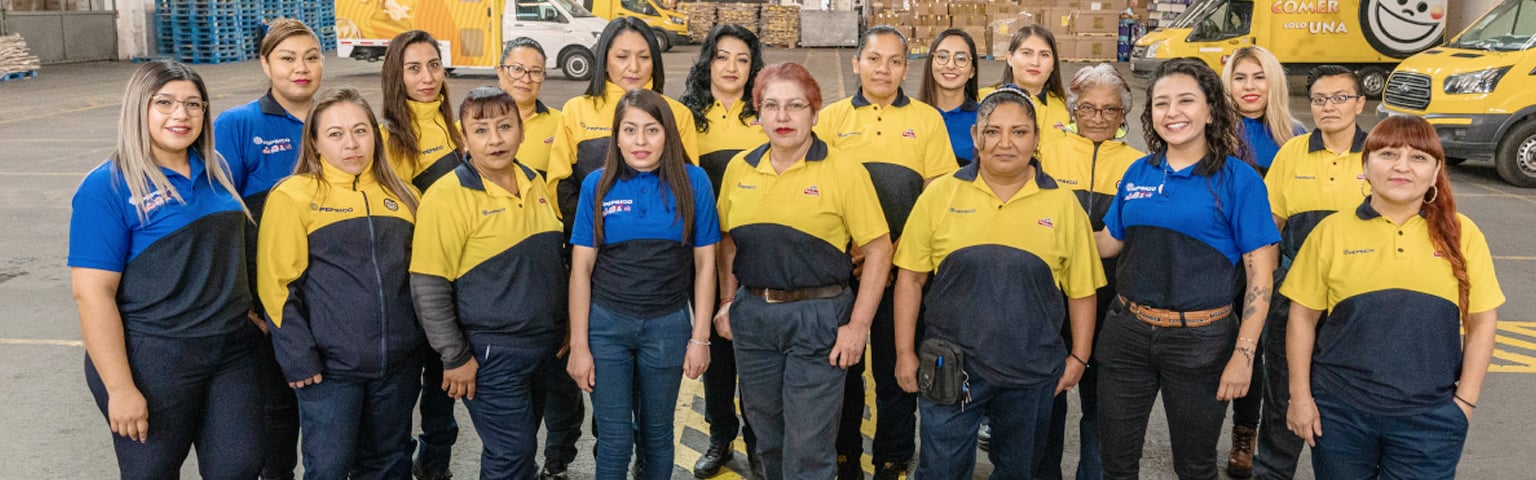
https://www.pepsico.com.mx/noticias/story/liderazgo-mujeres-pepsico
2. CEMEX: diversity and capacity development
CEMEX represents another interesting case of how an organisation can integrate diversity and talent development into its strategy.
The company has been promoting programs aimed at the professional development of women, including leadership, mentoring, coaching and participation in executive spaces.
One objective is creating conditions for women to advance professionally within the organization and hold positions of greater responsibility.
But CEMEX's work also extends outside its installations.
The company has been developing training, entrepreneurship and employability initiatives for women from communities where it operates.
That puts forward a more comprehensive vision of talent development: an enterprise can strengthen its own skills while contributing to the development of people who are part of its environment.
What can we learn from CEMEX?
Diversity should not be limited to hiring metrics.
To make a real impact, it is also necessary to work on training, leadership, mentoring and opportunities for growth.
Key lesson: inclusion generates more value as it becomes a strategy for capacity development.

3. Coca-Cola FEMSA: When Artificial Intelligence Becomes a Capability
Artificial intelligence is changing how companies conduct many of their activities.
However, Coca-Cola FEMSA presents a particularly interesting element: the company has focused not only on implementing AI tools, but also on prepare their employees to use them.
Coca-Cola FEMSA implemented Microsoft 365 Copilot and developed agents using Copilot Studio to facilitate access to information and improve different internal processes.
One of the most important points is that the organisation created training routes so that its own work teams could develop agents and solutions using these tools.
This changes the traditional relationship between technology and employees.
Instead of technology being managed only by IT, teams themselves can identify problems and develop solutions for their needs.
The reported results include time reductions in activities such as analysis, response to requests and repetitive tasks.
What can we learn from Coca-Cola FEMSA?
The implementation of technologies does not by itself guarantee a transformation.
A company can acquire the best tools available and achieve few results if its employees do not know how to use them.
That's why, technological upskilling becomes increasingly important.
Key lesson: the true value of artificial intelligence emerges when people have the skills needed to turn it into business solutions.
4. Grupo Bimbo: Transforming Experience into Knowledge
The large organizations have an asset that often does not appear in their financial statements: the knowledge of your employees.
Grupo Bimbo has developed initiatives to capture and transfer the experience accumulated within the organization over decades.
The aim is to ensure that knowledge held by long-serving employees is not lost when they change positions, retire or leave the organization.
The initiative aims to turn that knowledge into contents that can be used by new generations.
In Mexico, Grupo Bimbo reported more than 4,200 employees trained.
This type of strategy is especially important for large organizations, where a significant portion of knowledge may be concentrated in people with many years of experience.
What can we learn from Grupo Bimbo?
An organization should not depend exclusively on a person "knowing how to do things."
Critical knowledge should become processes, contents, training and transfer systems.
Key lesson: when a company shares its employees’ experience, it transforms individual knowledge into an organizational capability.
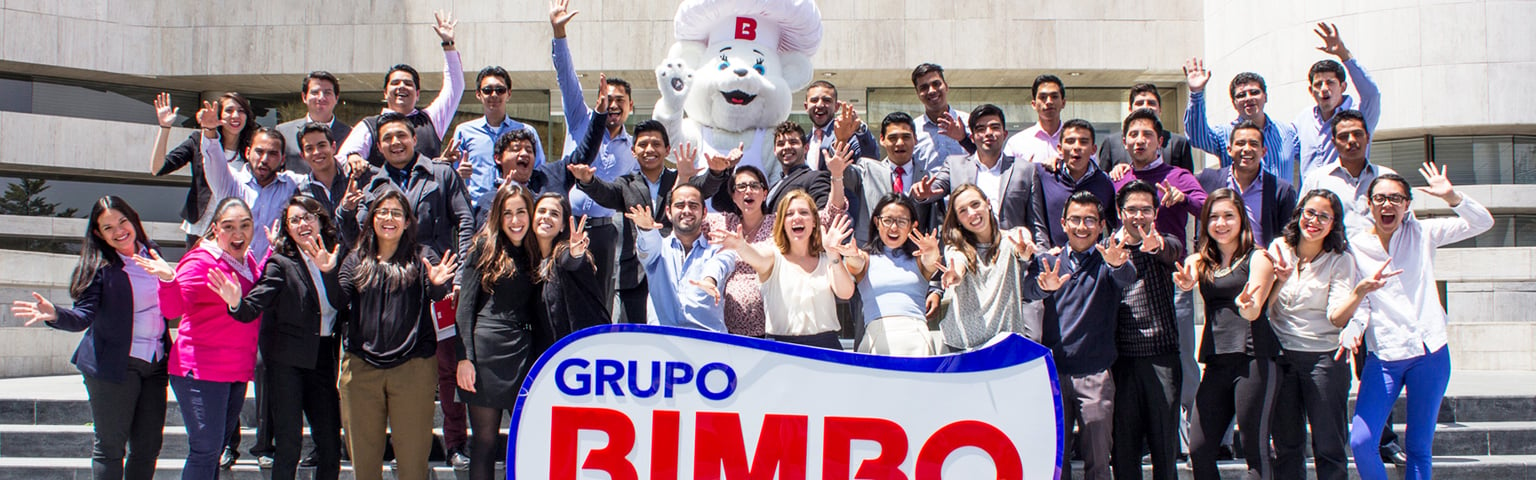
https://www.facebook.com/GrupoBimbo/photos/2748783788526783/
5. JS Training & Consulting: Transforms talent into results
The transformation can also be analysed from the perspective of organisations that help other companies to develop their skills.
JS Training & Consulting is a firm specializing in training and strategic consulting for companies seeking to improve team performance, optimize processes and achieve business objectives.
Its offering combines training, consulting, and development of technical and interpersonal competencies.
Currently with national coverage, more than 450 Specialized Courses and More Than 150 Certified Instructorsas well as capacity to conduct up to 20 courses simultaneously.
A methodology that begins with diagnosis
One element that distinguishes the JSTC model is that training begins before a course is delivered.
The process includes:
- Initial Assessment
- Specialist Selection
- Content development
- Implementation and Delivery
- Strategic Report
- Coaching and subsequent monitoring
This allows content to be adapted to each organization's specific needs and connects learning with concrete objectives.
In addition, their instructors have practical industry experience and certifications such as Train The Trainers and EC0217.01, as well as registration as external instructors with STPS.
Experience with big organisations
The JSTC experience includes projects with companies such as Honda, Michelin, Nissan, Pastes Kikos, La Costeña, and BP.
The projects include:
- Honda: Training 260 leaders in leadership.
- Michelin: training for more than 350 employees to improve their employability.
- Nissan: certification of LATAM instructors.
- Pastes Kikos: support in implementing your quality management system for ISO 9001.
- La Costeña: training his national sales force.
- BP: design of the customer service process and instructor training for more than 540 service stations in Mexico.
JSTC also reports more than $600 million in savings for their clients and a minimum ROI of 3:1 in Lean Six Sigma projects.
What can we learn from JSTC?
Corporate training has a greater impact when linked to a real need.
It's not just about accumulating courses or certificates.
It is about developing the capabilities that enable employees solve problems, improve processes and generate measurable results.
Key lesson: training should become a strategic tool to achieve business objectives.
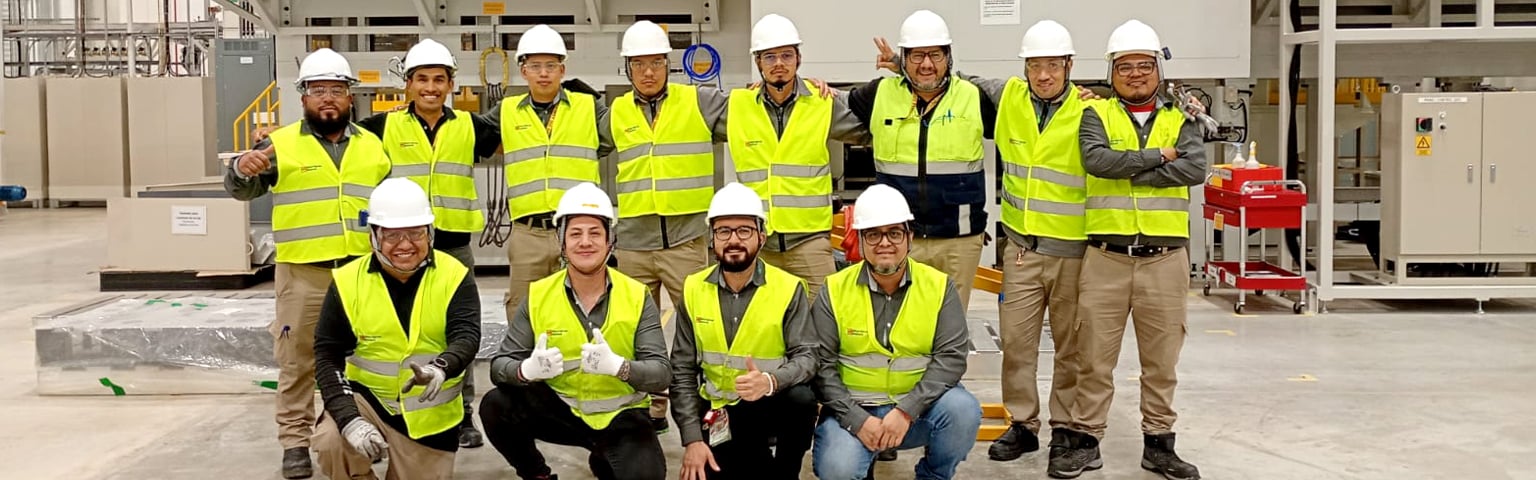
What do these five organizations have in common?
PepsiCo, CEMEX, Coca-Cola FEMSA, Grupo Bimbo, and JS Training & Consulting operate in different sectors and have different business models.
However, their experiences have something in common:
all recognize that transformation depends on people.
Technology can automate processes.
A new strategy can change an enterprise's direction.
But it's people who finally have to implement, adopt and sustain these changes.
5 lessons for companies that are trying to transform
Those cases allow for the identification of five principles that any organization can apply:
1. Develop talent before you need it
Training must anticipate changes in the market and technology.
2. Turn diversity into a strength
Inclusion should be accompanied by opportunities for learning, leadership and growth.
3. Provide Training to Make the Most of Technology
Digital transformation requires skills transformation.
4. Protect the knowledge of your organization
Documenting and transferring experience prevents critical knowledge from disappearing.
5. Measure the impact of training
Success should not be measured only by the number of trained people.
The important question is:
What improved after training?
The transformation begins with talent
These five cases show different ways to address the same challenge: To prepare organisations for a constantly changing environment.
PepsiCo is committed to diversity and learning.
CEMEX works with inclusion and leadership.
Coca-Cola FEMSA develops new capabilities around artificial intelligence.
Grupo Bimbo turns experience into knowledge.
And JS Training & Consulting works with organizations to develop talent, improve processes and turn learning into results.
The conclusion is simple:
The companies that wish to transform require people ready to make that transformation possible.
That's why investing in training, leadership, innovation and continuous improvement isn't just a decision by Human Resources.
That's a strategic decision of business.
Is your organization ready for the next change?
At JS Training & Consulting we design training and consulting programs tailored to each organization’s needs, with a practical, results-oriented approach.
Develop the capabilities your organization needs to face future challenges.
👉 Know our training and consulting solutions.