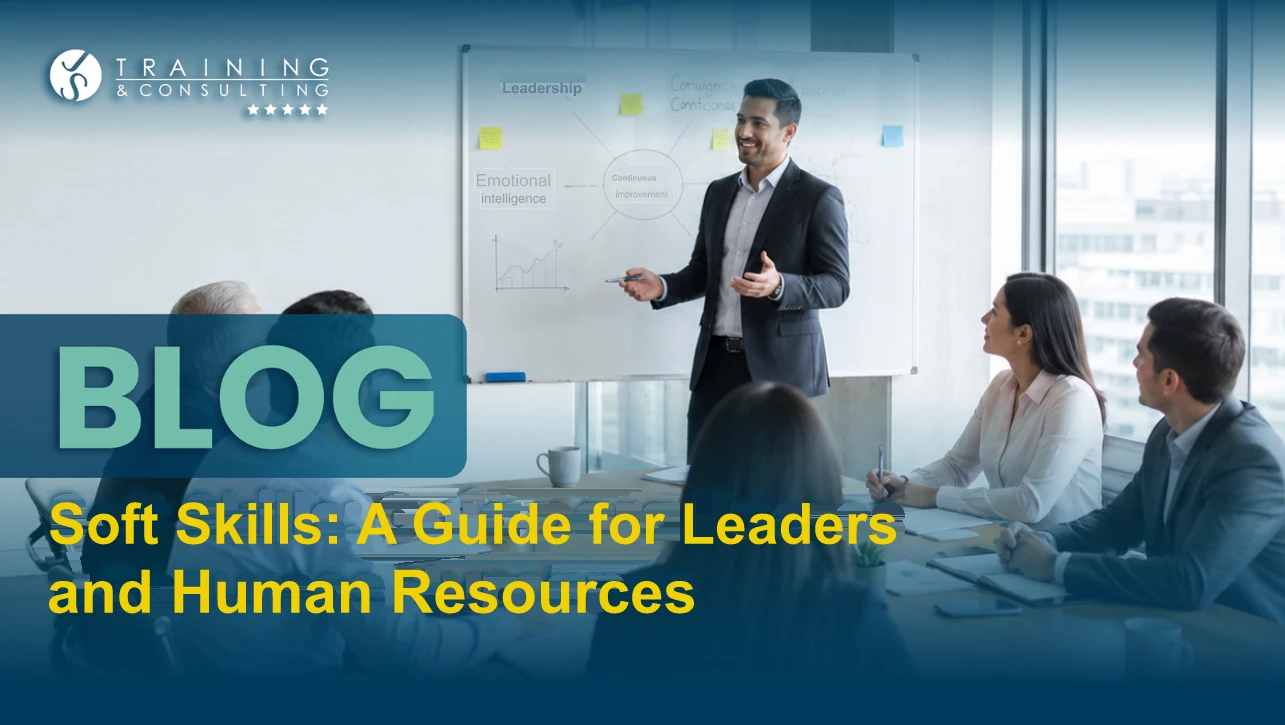
Blog. What are Soft Skills and how to develop them in your organization? A complete guide for leaders and human resources
Today’s organizations no longer compete solely by offering better products or adopting new technologies. It is increasingly clear that the difference between a company that grows sustainably and one that struggles lies in its employees’ ability to communicate, adapt, solve problems and work as a team.
In this context, Soft Skills are no longer an optional addition; they have become a strategic element of talent management. For leaders, managers and Human Resources professionals, developing these competencies is an opportunity to strengthen organizational culture, improve team performance and prepare the company for new challenges. This approach aligns with the ebook's emphasis on developing human skills as part of business competitiveness, although here the subject is addressed from a broader organizational perspective.
What are Soft Skills and why are they so important?
Soft Skills are a set of personal, social and behavioral skills That influence how people interact, collaborate and respond to different situations within the work environment.
Unlike technical skills, these skills strengthen how knowledge is applied daily and allow work teams to generate better results.
The following are among the most valued by the organisations:
- Effective communication.
- Teamwork.
- Leadership.
- Critical thinking.
- Emotional intelligence.
- Adaptability.
- Problem solving.
- Change management.
When these competencies are present, companies develop teams with a greater ability to collaborate, innovate, and respond to changing scenarios.
The impact of Soft Skills on organizational performance
A company may have technically skilled employees, but communication, project coordination or conflict resolution difficulties make it unlikely that results will reach their full potential.
The Soft Skills contribute directly to strengthening as:
- A better organizational climate.
- Greater collaboration between areas.
- more committed work teams.
- Better experience for internal and external customers.
- More effective leadership.
- Increased capacity to adapt to change.
That's why more and more organisations have been considering these skills as a key criterion for talent development and training for future leaders.

Group dynamics for development of key skills.
How to identify opportunities for improvement?
Before designing a training programme, it's important to know how far these skills are developed within the organization.
Some questions that can serve as a starting point are:
- Do the work teams effectively cooperate?
- Is there open communication between leaders and employees?
- Do Supervisors Know How to Manage Conflicts?
- Do people easily adapt to new processes?
- Is feedback an integral part of work culture?
Answering these questions helps identify opportunities for improvement and define actions aligned with business goals.
Strategies to develop these skills
Soft Skills are not strengthened solely through isolated courses. Their development requires continuity, practice, and commitment from both leaders and the organization.
Some effective strategies include:
- Implement training programs aligned with the needs of the business.
- To promote constant feedback.
- Develop leadership plans for middle and senior management.
- To promote collaborative projects across different areas.
- Recognize conduct aligned with organizational values.
- To generate spaces where people can practice new skills.
When these actions are an integral part of the enterprise strategy, skills are no longer individual and are becoming integrated into the organisation's culture.
Measuring impact is also part of the process
One of the best ways to boost continuous improvement is to evaluate how Soft Skills have an impact on business performance.
Beyond the number of courses given, companies can observe indicators such as:
- Reduction in employee turnover.
- Better communication between work teams.
- Increased employee commitment.
- Increased productivity.
- Better capacity to manage changes.
- Reduction of internal conflicts.
That approach allows for linking talent development with strategic goals and facilitates results-based decision-making, an idea that is also reflected in the ebook by emphasizing the importance of measuring the impact of training.
Similarly, International Labour Organization (ILO/OIT) recognizes that developing competencies improves productivity, employability and organizations’ ability to respond to changes in the working environment.

Individual session of feedback and monitoring of targets.
Conclusion: To develop people to strengthen organisations
The Soft Skills represent far more than a set of individual skills and are an essential element for building organisations with sound leadership, collaborative teams and a culture focused on continuous learning. Investing in their development enables better preparation for environmental challenges and turns talent into a sustainable competitive advantage.
If you want to explore this topic further and gain a broader perspective on the competencies organizations demand today, you can download Soft Skills eBook (Spanish PDF). You will find additional information, examples and recommendations that will enrich what's been referred to in this article and serve as a starting point for promoting your talent development.