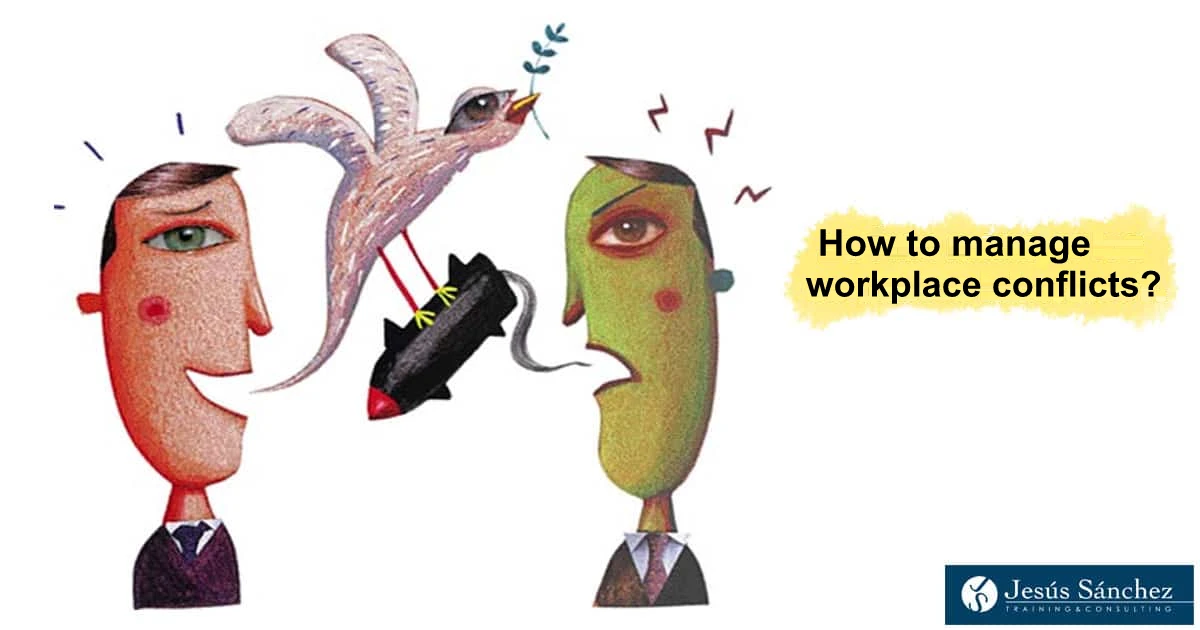
Conflict management is an essential competency for every supervisor. Regardless of the company’s industry, we must accept that we are human: sometimes our wires get crossed, or something strange happens in our heads, and we start arguing over situations with little sense or basis. We start half an hour earlier or leave half an hour later; the uniform “itches”; an extra $10 was deducted from our pay for being late; the cafeteria food is too greasy; the materials are too heavy; the luggage is poor quality; the hotel assigned to us does not have 5 stars (it has 4 and a half). Dear reader, you are probably already thinking of many others.
So, when conflict arises and the supervisor receives all the complaints and demands, they generally react in one of two ways: they do not know what to do, explode and impose their “sacred” will because “that is how it is, so put up with it”; or, as a colleague used to say, people treat them like a dishcloth. Both create a serious problem. In the first scenario, the team feels attacked, intimidated, belittled and oppressed by a tyrant who arbitrarily imposes their will like Caesar. In the other, the supervisor's hierarchical authority disappears and employees exploit and manipulate them at will, because the leader somehow believes they must keep everyone “happy” for things to keep working.
Both scenarios are wrong. Neither giving too much nor being inflexible and rigid is advisable. The key is understanding how people process information, communicating well and, above all, considering what is best for the company and individuals.
Supervisors face situations like this every day, returning home more mentally than physically exhausted because dealing with so many people is draining. That is why conflict management techniques matter. Believe it or not, techniques and tools do exist to help you reach a wonderful state of calm.
I want to share a couple of techniques with you:
- 3 strikes: First, understand that this is the golden rule for handling conflict or difficult customers. There is a fine line between flexibility and letting someone take advantage of you. The key is to understand and observe what employees communicate: it is often obvious when they are not telling the whole truth. This technique allows only 3 attempts to take advantage when something is clearly wrong. On the 3rd strike... out!
- The Gantt approach: an extremely simple technique for creating a clear schedule for projects or specific objectives. It provides visibility into different tasks, execution dates, deadlines and the person responsible for each item. It is also an easy way to empower staff.
- Third-party opinions: Yes, ask people neutral in the conflict for opinions that add value and illuminate difficult situations none of those involved may have considered.
- Consequences and repercussions: this technique draws on the supervisor's skills. You guide your team through conflicts so that those involved can identify how attitudes and decisions may have a drastic effect in the short, medium or long term. Drawing on people's own experiences, it is a very effective way to help them understand that things can get worse unless improvements are made now.
- Alternatives and possibilities: This technique lets the supervisor guide the conflicting parties to work together with commitment, finding better alternatives and faster, more decisive solutions. At the same time, this helps break the negativity that may already exist within the team.
It is worth emphasizing that there are many conflict management techniques. In the “Supervisor Development” course, we review other techniques through which supervisors also begin improving their negotiation skills. But all this improvement starts with leaders clearly understanding their position and responsibility and, above all, remembering that the goal is to create value for the company.
As mentioned, conflict management is an essential competency for all high-performance supervisors. Every supervisor should receive related training or learning. When managing interpersonal—and, worse, intrapersonal—conflicts, handling these situations can lead either to a complete team breakdown or to the cohesion needed to reach a new level of productivity, performance and commitment.
Keep that in mind.
Rock´n roll, people!