The Most Wanted Soft Skills
Are you ready to advance your career?
The Most In-Demand Soft Skills. In today's job market, where automation and technology advance rapidly, technical skills are no longer the only key factor in professional success. Companies now seek employees who also have soft skills (or soft skills) that will boost teamwork, adaptability and creativity in a dynamic environment. In this article, we will explore what these skills are, why they are important and what are best valued by companies. Also, we will include a practical plan to develop a soft skill in your daily life and a guide supported by recent studies to help you stand out in today's competitive work environment.
Throughout the article, we will answer the following questions so that you have a complete vision:
- What are soft skills?
- What soft skills should a person have?
- Why are they important?
Finally, we will share a list of the 10 soft skills most sought after by companies, supported by recent studies, and a practical guide to developing them.
What are soft skills?
Soft skills are those skills that have to do with interpersonal relations, communication, problem solving and other non-technical skills that facilitate collaboration in the work environment. These skills, such as empathy and adaptability, are directly related to how a person interacts with his or her environment and with others and are crucial to a positive and productive work climate.
What soft skills should a person have?
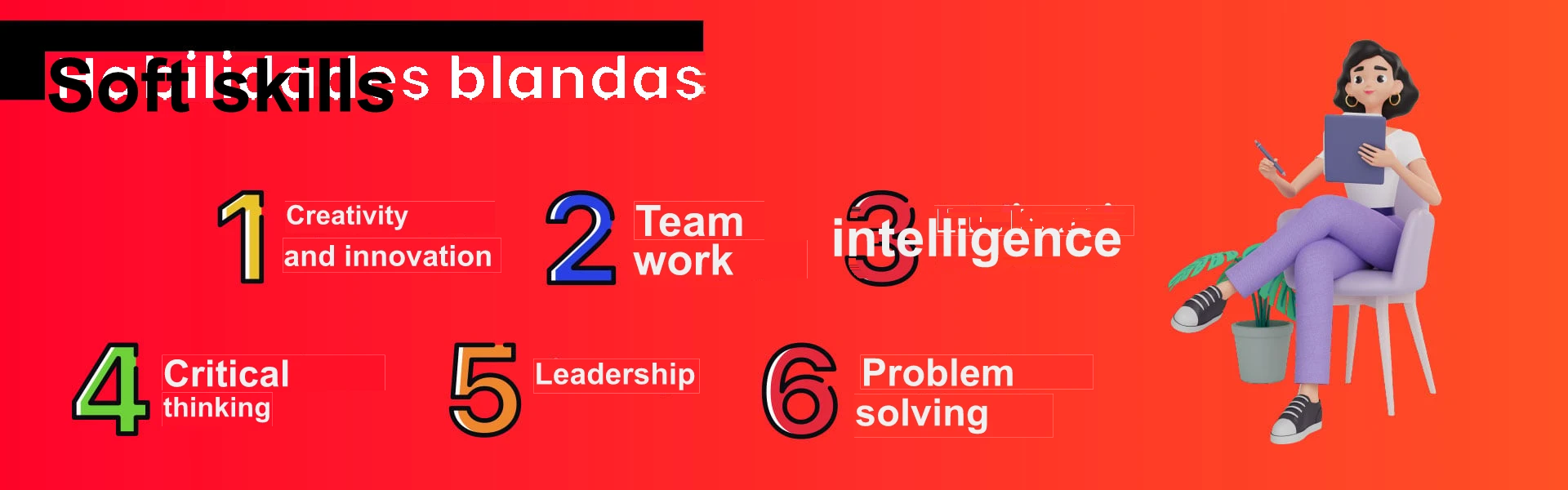
People need soft skills that enhance their technical skills and allow them to adapt quickly to different situations. These include problem-solving, emotional intelligence, leadership and effective communication. Developing these competencies helps an employee stand out in any sector.
Why are soft skills important in the labour market?
Soft skills matter because they drive productivity, improve team interaction and strengthen organizational culture. Today, human resources leaders value these skills as much as technical skills. According to the National Association of Colleges and Employers (NACE), 77% of companies consider soft skills as important as technical skills for professional success. In rapidly changing environments, these skills also help employees adapt and remain resilient.
The Most Wanted Soft Skills
The 10 Soft Skills Most Sought After by Companies in 2024
Below is a list of the most in-demand soft skills in the job market, with a brief description of each:
- Effective communication
Expressing ideas clearly and listening to others are essential for preventing misunderstandings and fostering collaboration. Companies seek people who can express themselves confidently and clearly. - Emotional intelligence
The ability to recognize, understand, and manage emotions, both your own and those of others, is key to improving interpersonal interaction and resolving conflicts effectively. - Adaptability
In a constantly changing environment, companies value employees who adapt to new circumstances, learn quickly and provide innovative solutions. - Teamwork
Collaborating effectively with others is vital in almost any role. Employers seek people comfortable working with different teams and contributing value to the group. - Leadership
It is not just about supervising, but about inspiring others. Leaders with soft skills can motivate their teams and guide them toward shared company objectives. - Critical thought
That skill allows people to analyse problems logically and objectively by identifying useful and effective solutions. - Time management
Organizing and prioritizing tasks is crucial to meeting work's demands without sacrificing quality and productivity. - Creativity
The ability to generate new and original ideas is highly valued, especially in areas that demand innovation and problem solving. - Empathy
Understanding the needs and feelings of others is essential to build strong relations and build confidence in the work environment. - Negotiation
The ability to reach mutually beneficial agreements is important in any organization, as it helps build lasting, satisfactory relationships.
Growth table of the most in-demand soft skills
According to LinkedIn's latest report about skills trends in 2024, soft skills have been growing markedly in demand in recent years. The following table shows soft skills with highest growth in the labour market:
| Soft Skill | Growth in demand (%) |
|---|---|
| Emotional intelligence | 80% |
| Adaptability | 75% |
| Critical thought | 70% |
| Effective communication | 65% |
| Teamwork | 60% |
Plan to develop soft skills: Emotional Intelligence
Objective: Improve emotional intelligence to manage emotions and interpersonal relationships better.
Step 1: Self-awareness
Spend a few minutes each day reflecting on your emotions. What causes them, and how do you react? Recognizing your emotions is the first step toward managing them.
Step 2: Self-management
Work on controlling your emotional responses to stressful situations. Breathe deeply and respond calmly to challenges or conflicts.
Step 3: Empathy
Listen actively to others, try to understand their perspective and show empathy in your daily interactions.
Implementation in daily life:
Do these steps in your daily interactions, at home or at work. Emotional intelligence isn't immediately acquired and requires constant practice and self-assessment.
References from soft skills experts
Daniel Goleman, author of “Emotional Intelligence,” is a pioneer in the field and maintains that emotional intelligence is fundamental to workplace success. Simon Sinek, author of “Leaders Eat Last,” highlights empathy and leadership's importance in creating strong, collaborative teams.
Conclusion
Soft skills are an investment in personal and professional development and play a crucial role in the growth of any company. Investment in training of these competencies allows employees to stand out in an increasingly competitive, globalized workplace. For business leaders, encouraging soft skills development is a key strategy that drives productivity and strengthens organizational culture. As teams enhance these skills, the company will achieve a healthier, more efficient workplace, with committed employees adding unique, lasting value to the organization.