Why should you have a certified Black Belt at your company
Why Your Company Should Have a Certified Black Belt. Efficiency and continuous improvement are essential to success. Implementing methodologies such as Lean Six Sigma can significantly improve processes and reduce waste. A certified Black Belt in your organization not only strengthens quality but also leads improvement projects that can deliver substantial savings and greater customer satisfaction.
What Does a Black Belt Do?
A Lean Six Sigma Black Belt is a highly trained professional who leads process improvement projects within an organization. Their responsibilities include:
- Project leadership: To conduct improvement initiatives, ensuring that they are aligned with the company's strategic objectives.
- Training and mentoring: To train and guide Green Belts and other team members in applying Lean Six Sigma tools and techniques.
- Data analysis: Using advanced statistical methods to identify opportunity areas and monitoring project progress.
- Change management: To facilitate the adoption of new practices and to ensure the sustainability of the improvements implemented.
In essence, the Black Belts act as agents of change, promoting the culture of continuous improvement and efficiency within the organization.
What is the Lean Six Sigma approach?
Lean Six Sigma combines Lean Manufacturing and Six Sigma principles to improve process efficiency and quality. Its approach focuses on:
- Waste elimination: To identify and eliminate activities that have no value to the client, optimizing workflow.
- Reduction of variability: Use statistical tools to minimize process variation, ensuring consistent, high-quality results.
- Customer Focus: Ensure that processes and products meet or exceed client expectations.
- Continuous improvement: To promote a culture where opportunities are constantly sought to improve and optimize.
By integrating these principles, Lean Six Sigma helps organizations deliver high-quality products and services more efficiently.
Differences between Green Belt and Black Belt
Although both Green Belts and Black Belts are crucial to the implementation of Lean Six Sigma, there are key differences between them:
- Level of responsibility: The Green Belts often work on part-time improvement projects while the Black Belts spend their full time leading strategic projects.
- Knowledge and skills: Black Belts have deeper knowledge of Lean Six Sigma tools and techniques, including advanced statistical analysis and change management.
- Role in the organization: While Green Belts support data collection and analysis, Black Belts lead projects, train others and act as internal consultants on process improvement issues.
These differences highlight the importance of having Black Belts to lead high impact improvement initiatives in the organization.
The knowledge that a Black Belt should have
A certified Black Belt should master a range of knowledge and skills, including:
- DMAIC Methodology: Explore the Define, Measure, Analyze, Improve, and Control phases in depth for process improvement.
- Advanced statistics: Apply statistical techniques for data analysis and informed decision-making.
- Project management: To plan, implement and monitor improvement projects, ensuring that targets and deadlines are met.
- Leadership skills: To motivate and guide multidisciplinary work teams to achieve common goals.
- Change management: To facilitate the adoption of new practices and to ensure the sustainability of the improvements implemented.
The skills allow the Black Belts to effectively lead improvement projects and have a positive impact on the organisation.
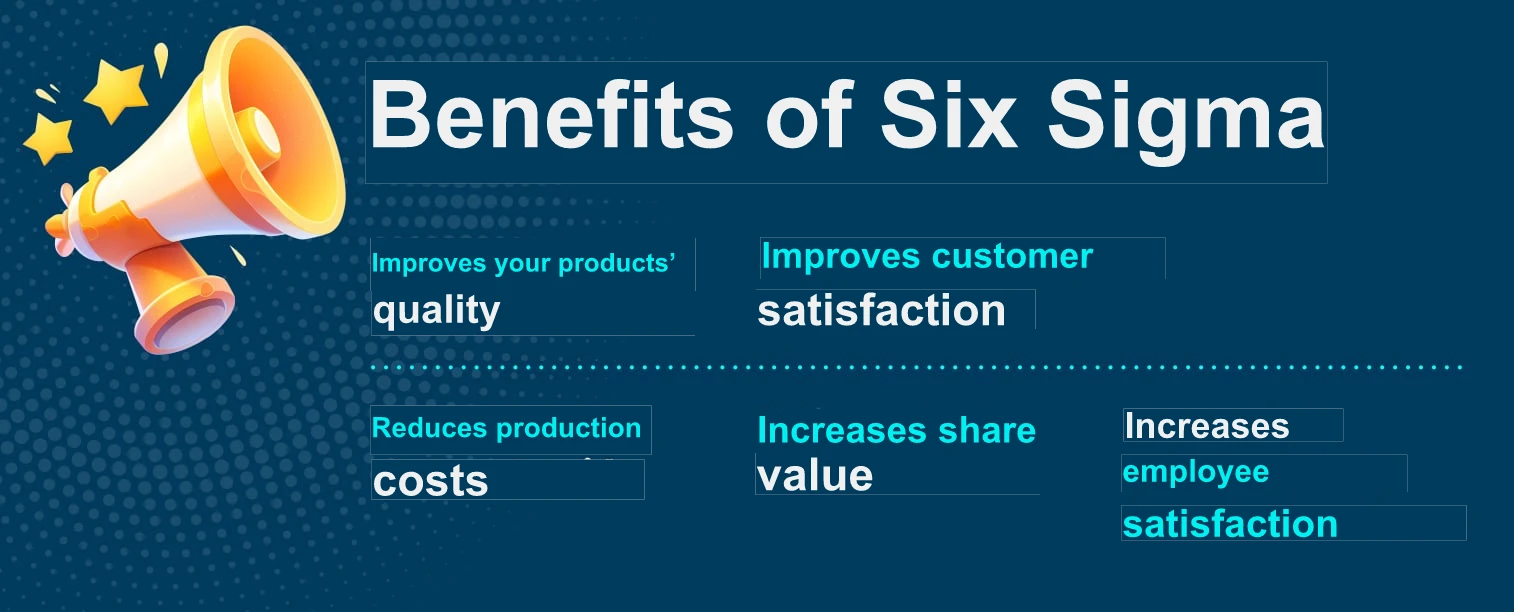
benefits lean six sigma
The importance of having a Black Belt in your organization
Bringing a certified Black Belt into your company offers multiple benefits:
- Efficiency improvement: Optimization of processes leading to a reduction of costs and cycle times.
- Increased quality: Decreased defect and variability, increasing product or service quality.
- Internal talent development: Training and mentoring of other employees in continuous improvement methods.
- A competitive advantage: Ability to respond quickly to market changes and customer needs.
A Black Belt acts as a catalyst for organizational transformation and promotes an operational culture of excellence.
Wage Comparison: Black Belt vs. Yellow Belt and Green Belt
Lean Six Sigma certification adds organizational value and is also reflected in professionals' compensation:
- Yellow Belt: Professionals with basic Lean Six Sigma knowledge often participate in improvement teams.
- Green Belt: They have a deeper understanding and lead smaller-scale projects or support bigger projects.
- Black Belt: They lead high impact strategic projects and have
Conclusion: Training as the Key to Success
To have a Black Belt certified in your company not only improves processes and operational efficiency, but strengthens organizational culture and innovation capacity.
These professionals provide a structured and data-based approach to problem solving, helping businesses achieve high standards of quality and profitability.
Moreover, Lean Six Sigma training is an investment with a significant return, enabling cost reduction, resource optimization and improved customer satisfaction.
If you want to promote continuous improvement in your organization, consider training your team and certifying a Black Belt to lead the way toward excellence.
Invest in training and transform your company with Lean Six Sigma!