Lean Six Sigma Methodology
Know your 5 Learning Levels
Improve the quality of your processes, reduce costs, and increase efficiency.
Lean Six Sigma Methodology is a powerful tool companies use to improve process quality, reduce costs and increase efficiency. A central part of this methodology is progressively developing skills and knowledge through five certification levels. White Belt, Yellow Belt, Green Belt, Black Belt and Master Black Belt represent a learning journey from basic awareness to full mastery of Lean Six Sigma. This article explores each level in detail and its importance to successful implementation.
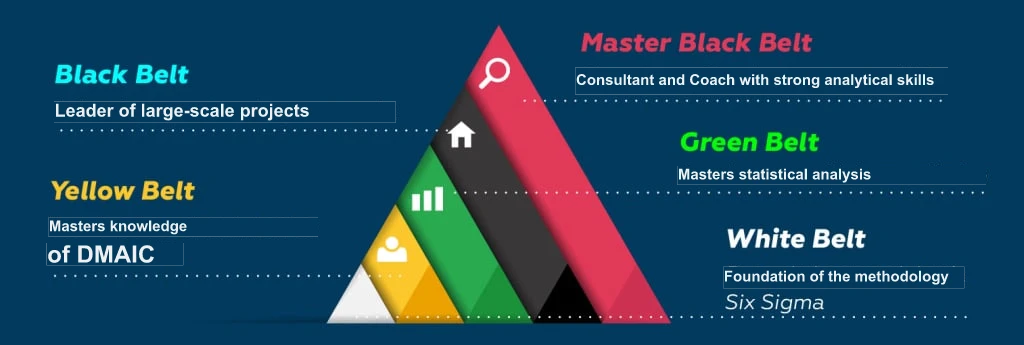
The Lean Six Sigma methodology relies on a 5 level structure
Level 1: White Belt
The White Belt It's the starting point on the way to understanding Lean Six Sigma. At this level, individuals gain a basic awareness of the key concepts of the methodology. They familiarize themselves with the terms used, the general objectives and how Lean Six Sigma can positively impact an organization. Although they are not directly involved with improvement projects, the White Belts play a crucial role by disseminating knowledge in the organization and encouraging the adoption of the methodology.
Level 2: Yellow Belt
The Yellow Belt represents a step forward in the learning journey. People at this level understand Lean Six Sigma concepts and tools more deeply. They can participate in smaller improvement projects and support projects led by Green Belts or Black Belts. Yellow Belts can collect data and perform basic analysis to identify improvement opportunities, making them valuable during project execution.
Level 3: Green Belt
The Green Belt is an intermediate certification level and one of the most influential in Lean Six Sigma implementation. Professionals gain in-depth knowledge of the methodology’s tools and techniques. Green Belts can lead medium-sized improvement projects that significantly affect organizational results. They can collect and analyze data using more advanced methods, identify root causes and apply effective solutions. Green Belts become change leaders within their teams and work areas.
Level 4: Black Belt
The level Black Belt is a symbol of mastery in Lean Six Sigma. Black Belts are experts in the methodology and can lead complex, high-impact projects. Their deep knowledge of advanced statistics and analysis enables them to address critical problems and achieve significant process improvements. In addition to leading projects, Black Belts often mentor Green Belts and Yellow Belts, guiding their professional development.
Level 5: Master Black Belt
The Master Black Belt represents the highest level of Lean Six Sigma proficiency. These strategic leaders oversee implementation throughout the organization. They have in-depth knowledge of Lean Six Sigma practices and concepts and extensive experience leading multiple large-scale projects. Master Black Belts also play an important role in training and mentoring Black Belts and professionals at lower certification levels.
Conclusion
Lean Six Sigma methodology is not just a set of tools, but a structured, scalable approach to continuous improvement. The five certification levels—White Belt, Yellow Belt, Green Belt, Black Belt and Master Black Belt—represent a development path from awareness to mastery of the methodology. Each level plays a crucial role in transforming processes and creating a culture of continuous improvement within an organization. By adopting and promoting these learning levels, companies can ensure they have the knowledge and skills to drive success in an increasingly competitive business world.
Become certified as an expert in Lean Six Sigma. Certifications with international validity
Take advantage of our 20% discount promotion at Yellow Belt & Green Belt