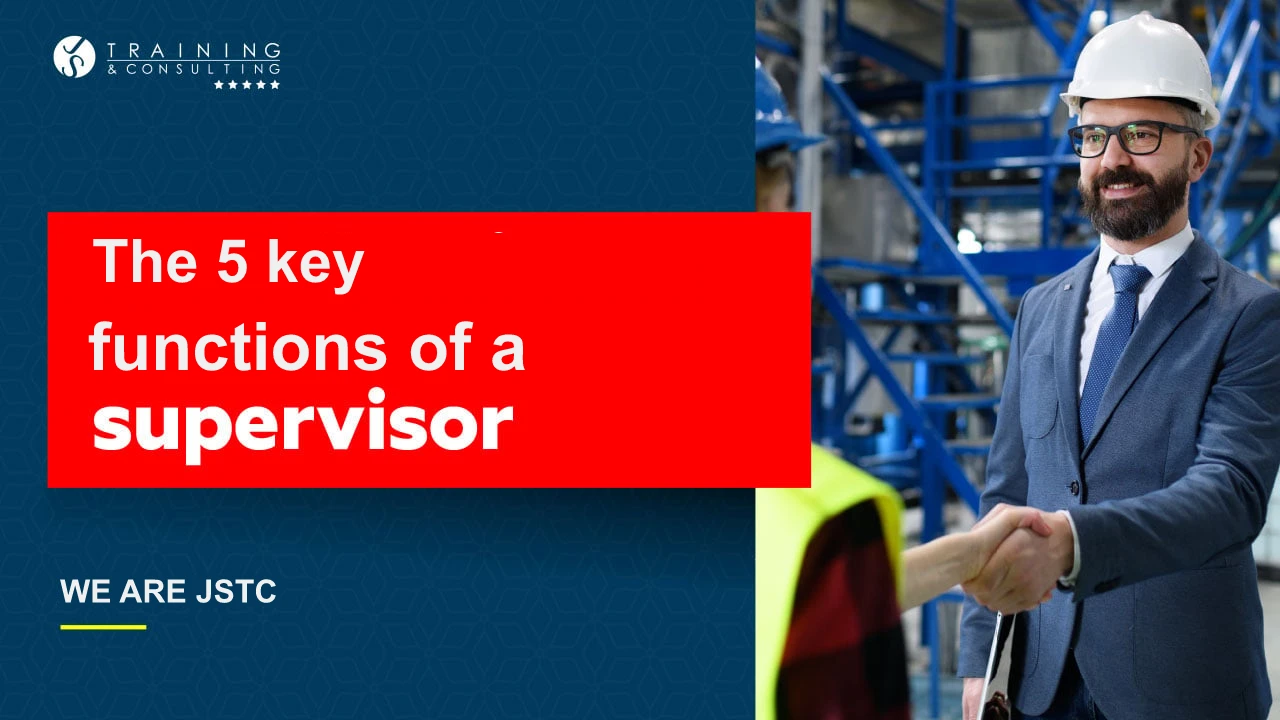

I know this is one of supervisors' main shortcomings and a real headache for you. We know you give internal talent opportunities to grow as part of a career development plan. But what happens when, overnight, everyone's “buddy”—the most popular person in the plant, always helping whoever needs it and also the soccer team's central defender—becomes the supervisor, the leader?
You suddenly have countless new responsibilities, including leading a sales, production, warehouse or field team with a clear objective. The pressure reaches its peak. That friendly, likable colleague everyone loved may let the position go to their head and become a taskmaster or dictator. In other cases, fragile nerves make them collapse, and the team begins to treat them with contempt: no respect, no attention to instructions, lateness, low productivity, zero sales, zero quality and countless other problems.
And that is normal, you know. Although we all develop and grow within a company, we do not all learn at the same pace. That is why another ingredient is sometimes added to the complex task of supervision: age. “What is this kid going to teach me when I've been doing this for 15 years?” “I laid the first stone and I'm buddies with the engineer. Who does this person think they are, coming here to tell me what to do?” “They're only there because they have connections with the manager.” And so a series of excuses becomes the team's way of resisting work with our brand-new supervisor.
When it is time to promote someone or a vacancy creates an opportunity for employees to advance internally, we consider knowledge, achievement of goals, attitude and character, but rarely observe or measure leadership. This is a real Achilles' heel in Mexican industry. Corruption, or appointing not the best person but the immediate boss's favorite, makes leadership one of our least important concerns: somehow the person has a “patron” and support from higher powers beyond their understanding.
However, dear reader, having reached this point, you know this is a professional development need in your corporation, regardless of its industry. Supervisor development is vital to making the front line productive, effective and harmonious.
Leadership is not innate; it results from education, including at home. Parents' character generally shapes their children's, giving them greater composure and emotional intelligence. Even if your supervisors lack that character, leadership can still be developed.
How do we develop it? That is the heart of the matter.
First, understand that this is not just a matter of one training session. For example, in our “Supervisor Development” course, your employees learn and can apply different leadership styles as needed: coercive leadership when concessions and scheduling flexibility are impossible; connecting leadership when alliances and timely support are needed; coaching leadership when the task is to advise, guide and support the team's growth; etc.
Second. We must understand that interpersonal conflict cannot be resolved through a supervisor’s hierarchical power. A range of techniques and strategies is needed to avoid confrontation and learn to mediate and manage conflicts fairly.
Third. Your new supervisors, now organizational leaders, must understand that their ultimate role is to become agents of change. Leading a team is not enough. If they do not seek to make a lasting impact, stand out, experiment and do things differently, they are completely lost.
I have always considered it management's immediate responsibility to ensure that, at the very least, supervisors are well prepared and have the tools they need. In difficult situations, the whole team's effort may indeed keep the ship afloat. But if the captain has not the faintest idea how to navigate, then, dear reader, you are in a biiiiig predicament. Good luck with that…
Rock´n roll, people!