Impact of training on your company
What's the impact of training on organisations?
The Impact of Training on Your Company. Training is a fundamental component of employees' development and growth, as well as that of organizations as a whole. It emerged in response to the need to improve workers' skills and knowledge so they could adapt to constant changes in the workplace and technology.
What's training and where does it come from?
Training is a systematic process designed to improve the skills, knowledge and attitudes of employees regarding their work responsibilities. It emerges from the need to increase efficiency and productivity at work as well as to promote personal and professional growth of individuals within an organization.
What Is the Impact of Training and Talent Development on Personnel Departments?
- Labour performance improved: Training and talent development directly affect employees' job performance. By acquiring new skills and knowledge, workers can perform their roles more efficiently and effectively, resulting in greater productivity for the organization.
- Increased retention of talent: Organizations that invest in employee training and development tend to experience higher talent retention. Employees value opportunities for professional growth and development and tend to stay with companies that offer them these opportunities.
- Promoting a positive work environment: Training not only benefits employees individually but also creates a positive, collaborative work environment. Employees feel valued and motivated when given opportunities to improve their skills and advance their careers.
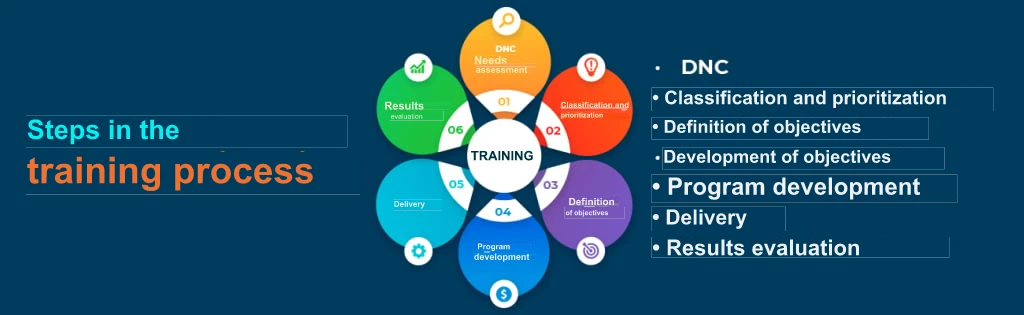
steps-of-the-training-process
How to measure the impact of training?
To measure the impact of training is crucial to evaluating its effectiveness and ensuring that it is aligned with organizational objectives. Here are some ways to do so:
- Evaluation of participants: Conduct surveys or questionnaires for direct participant feedback on training quality and relevance. Ask about content usefulness, instructor quality and perceived impact on workplace performance.
- Performance indicators: Define key performance indicators (KPIs) related to the specific areas that training is expected to improve. For example, if the goal is to increase sales, you can measure increased sales volume after training.
- Investment return analysis (ROI): Calculate the ROI of training by comparing implementation costs with the benefits obtained. Consider both tangible benefits, such as increased productivity or fewer errors, and intangible benefits, such as improved customer satisfaction.
3-step process for proper training
Step 1: Identify training needs – DNC
Conduct a training needs analysis to identify areas where employees need to develop additional skills or knowledge.
Step 2: To design effective training programs
Develop training programs aligned with organizational strategic objectives and addressing needs identified in the previous step.
Step 3: Assess and Adjust
Implement assessment systems to measure the impact of training and make adjustments based on the results. Ongoing feedback is key to continuously improving training programs and maximizing their effectiveness.
In conclusion, training and talent development are critical to any organization’s long-term success. Investing in employee growth and development improves work performance, increases retention and promotes a positive, collaborative workplace. Do not underestimate the power of training on the road to business success!
Are you ready to get training at your organization to the next level? Contact us today to get more information about our custom training programs! JS Training & Consulting