Master Assertive Communication
Company Growth
Assertive communication is essential in today’s business world. Applied correctly, it fosters a healthy workplace and drives organizational growth by improving efficiency, productivity and employee satisfaction. This article explores what assertive communication is, its different types, how to implement it at work and why it is central to business success and growth. We also offer practical examples illustrating its application in everyday business life.
What is Assertive Communication?
The assertive communication is the ability to express ideas, feelings and needs clearly, directly and respectfully, without aggression or submission. In business, assertiveness enables effective messages, creating mutual understanding and preventing misunderstandings. According to communication psychologist Albert Mehrabian, assertiveness lies midway between passive and aggressive communication and is crucial to developing productive working relationships.
4 Types of Assertive Communication
There are different ways to apply assertive communication, each adapted to different situations. These are the 4 main types of assertive communication:
- Basic Assertivity: It means expressing thoughts and wishes directly, respecting both your own opinions and others'. Example: “I would like us to review this report before deciding.”
- Empathetic Assertiveness: It focuses on understanding other people's feelings and needs before expressing their own. That kind of communication helps create empathy. Example: "I understand that you have a lot of work but I need your help with this project."
- Escalating Assertiveness: This is used when a request or comment has not initially been respected. It means reinforcing communication more firmly without being aggressive. Example: “I mentioned it before, but now it is crucial that we finish this report on time.”
- Progressive Assertivity: It's used in situations where clear boundaries have to be established. It's about strengthening the position and, if necessary, repeating the message. Example: "I appreciate your suggestions but I prefer to continue with my current plan to complete the project."
Master Assertive Communication
How Is Assertive Communication Practiced?
To implement assertive communication in a company, it's vital to follow some key steps:
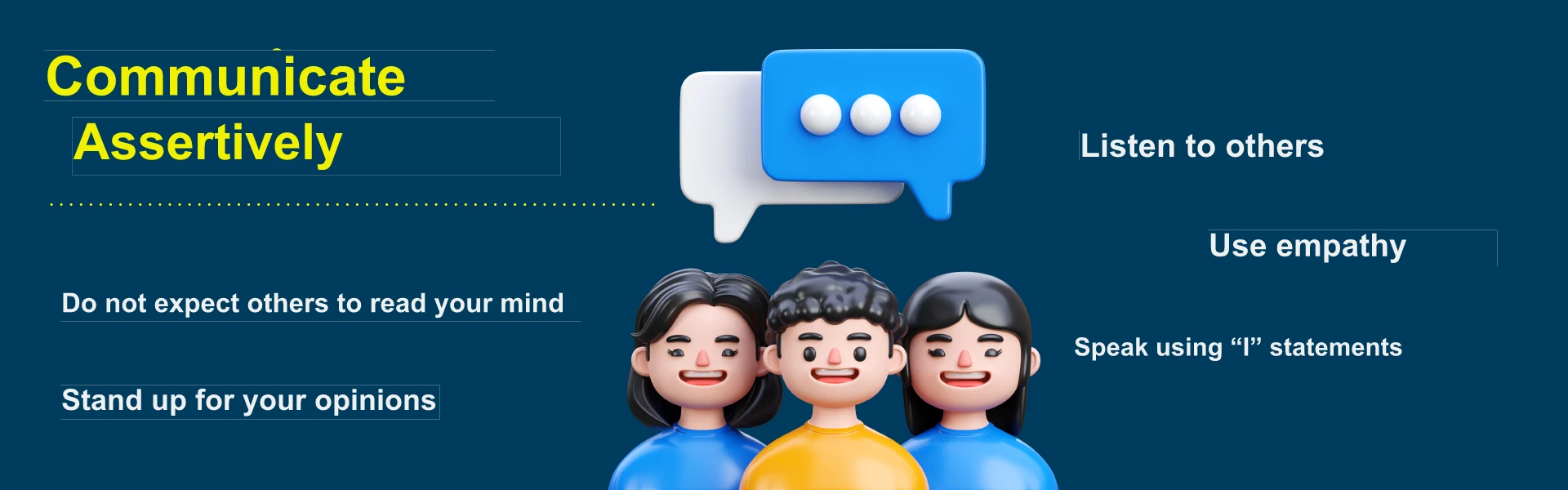
- Active listening: Listen carefully to the other person to understand his or her viewpoint before responding.
- Clarity in message: Expression of ideas directly, avoiding ambiguities.
- Mutual respect: Value others’ opinions without belittling them, regardless of whether you agree or disagree.
- Suitable tone: Keep a calm and respectful tone, even in situations of tension or disagreement.
- Positive feedback: To strengthen the positive aspects before we propose any constructive criticism.
Why Is Assertive Communication Key to Business Growth?
Assertive communication within companies creates a more collaborative, efficient working environment. Some of the Reason why assertive communication is crucial to corporate growth include:
- Encourages trust and transparency: Employees who communicate assertively are more likely to express ideas and concerns, enabling companies to identify and resolve problems early.
- It improves decision-making: Clarity and respect in communications facilitate mutual understanding and this in turn contributes to more effective and faster decision-making.
- It reduces conflict: A clear and respectful communication minimizes misunderstandings and unnecessary tensions and promotes a more harmonious work environment.
- The motivation and commitment are increased: When employees feel heard and respected, their commitment to the company increases, improving performance.
Example of Assertive Communication in the Business Environment
A practical example of assertive communication in a company's daily life could be the interaction between a team leader and an employee who has submitted incomplete work. Rather than taking an aggressive approach, the leader can choose assertive communication and say:
"I understand that you have been working on a number of projects and I appreciate your efforts. Nevertheless, we need the report to be complete for tomorrow's meeting. How can we organize your time so that you can finish it in time?"
This example shows how to address a problem respectfully and constructively, offering solutions instead of simply pointing out mistakes.
Assertive Communication and Its Impact on Corporate Training
This article has analyzed how assertive communication is key to business success. By answering questions about its definition, types and implementation, we have shown that this skill improves workplace dynamics and acts as a catalyst for growth. Companies that provide assertive communication training achieve a more efficient, collaborative and healthy work environment.
For example, Marshall Rosenberg, creator of nonviolent communication, emphasizes the importance of words in building business relationships. Likewise, Dale Carnegie, in his book “How to Win Friends and Influence People,” emphasizes the power of empathy and assertiveness in professional success.
Training employees at assertive communication is an investment that offers strong returns. Improving how employees express themselves and listen leads to greater productivity and, ultimately, business growth. If you want your company to experience these benefits, start developing assertive communication training programs today and watch workplace relationships and business results flourish.
Do you want to train your work team? Click to contact us