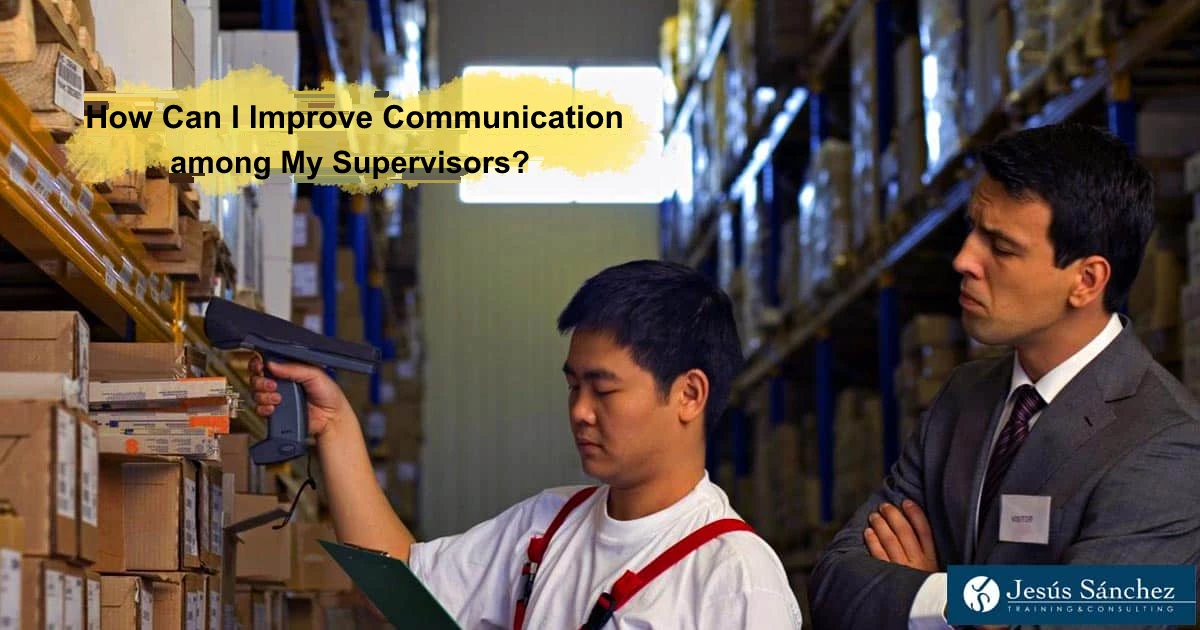
Our Supervisor Development course is one of the services clients request most. Surprisingly, most are seeking help to improve supervisors’ communication with both their teams and superiors. I say “surprisingly” because I have always naively believed communication skills should be a must when selecting a new supervisor. A major mistake! Communication skills seem to be the last thing our recruiters consider.
That is why we encounter fractured teams—a divided locker room, in soccer terms. Yes, the players still take the field for matches, just as people on the factory or sales floor continue doing their jobs. But how do they do them?
With reluctance and indifference, a lack of interest and responsibility, passing the buck to one another and simply avoiding trouble with their supervisor. Moreover, if we enter the restrooms, which employees unconsciously perceive as their “own private” space, we may find graffiti and disrespectful messages confirming the poor workplace climate.
I am convinced that 80% of the problems in your company begin with communication issues and poor perceptions between supervisors and operational staff, and between management and supervisors. We ultimately see people working individually rather than collectively and, as they say in my town, “everyone channels water to their own mill.”
Given this particular situation, one success factor in our Supervisor Development course is addressing communication. This is far from simple, especially when a supervisor has only basic academic education. Nevertheless, the only truly wasted effort is the one never made, and we have a considerable number of satisfied clients to show for it.
Anyway, dear and underappreciated reader, what I wanted to tell you is that communication is essential and critical in supervisor development. As we mentioned, however, it is not easy to work on. I therefore want to offer some simple, straightforward recommendations to help your employees improve in this area. NOTE: these do not guarantee the problem will be solved; training is necessary. But they are a good starting point for consistent improvement.
Stay sharp!:
- Keep it simple! This was one of my mentor’s greatest lessons around 2004. Teach your leaders that “less is more.” This is not school or a high-school essay exam. Assertive communication requires a clear, forceful message in few words. Rambling only reveals that you are unsure what you want to say—or, worse, do not understand it yourself.
- Tactics and strategy: Teach supervisors to map out their communications. What you will say and in what order is one thing; how you will present it is another. To make it work, start with pencil and paper. Remember, you want to win over your listener or reader. What did you do with your boyfriend or girlfriend when you were young? It was all about surprise, wasn’t it? This is similar.
- Make it easy to digest: Move from the general to the specific, helping your audience understand how you reached a particular number, conclusion or hypothesis. People do not think like you, so guide them through the exciting journey you are about to present.
- Without fear of failure: I know communication does not come naturally to many of us, but supervisors have to learn. There is no more effective way than taking the bull by the horns. Yes, you may have to stumble over your words before improving, but that is all right. In a few weeks, you will laugh at your hugely embarrassing moments.
- Smile. What? How? Yes, just as you are probably smiling now—or so I like to think. A smile should be your ace up your sleeve, your dark horse, your Achilles’ heel. When things become tense, smile. Things may still go terribly wrong, but what if they do not? People will see you as positive and encouraging. With you beside them, what could go wrong?
So then… let’s get to work. Let’s find those supervisors and shake up their ideas.
Rock’n roll people!