
PDCA cycle: How to apply continuous improvement in 4 steps
Why is continuous improvement key to modern corporate management?
The continuous improvement is vital in an increasingly competitive business world, where optimizing processes and ensuring operational efficiency makes a difference. One of the most effective methods to achieve this is the PDCA cycle, also known as the Deming cycle. That model allows organisations to implement improvements systematically and sustainably in any work area.
In this article, we will explore what PDCA cycle is, its benefits and how to apply it to boost a culture of continuous improvement within your company.
What's the PDCA cycle?
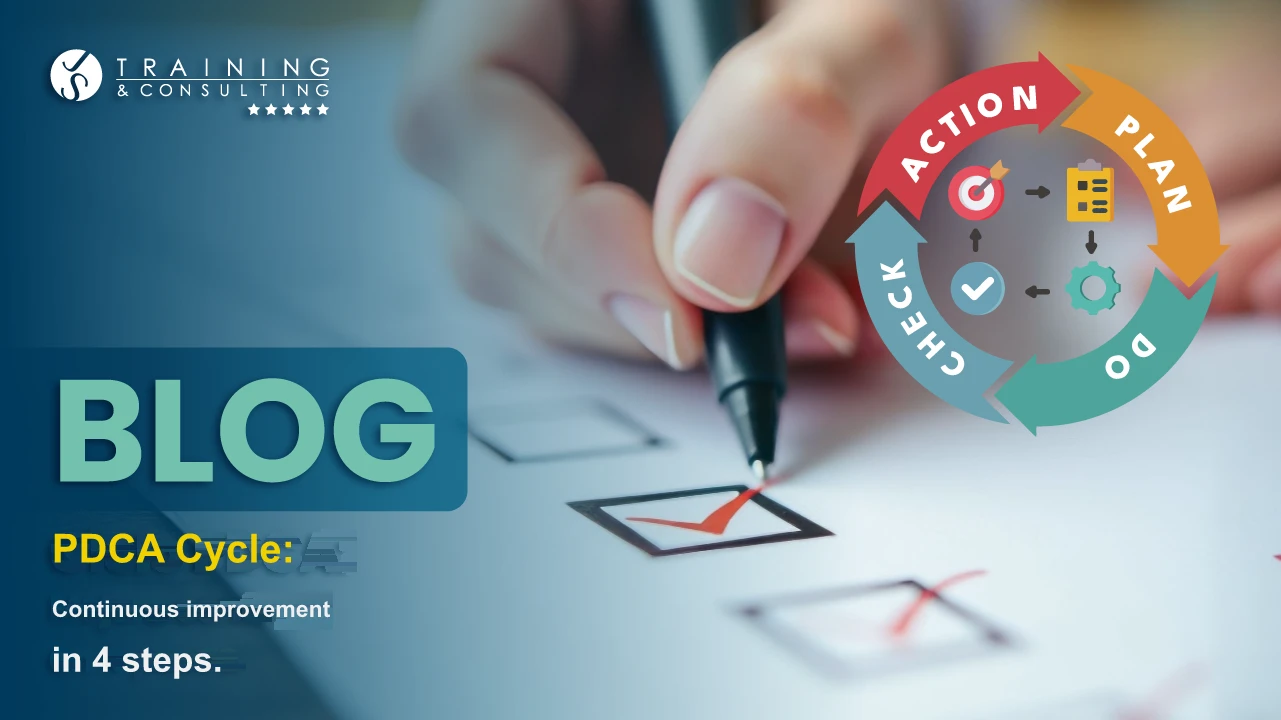
The PDCA cycle (Plan-Do-Check-Act) is a management methodology based on continuous improvement through four phases:
- Plan (Plan): To identify problems, analyse the current situation and set clear targets.
- Do: Implement the proposed small-scale solutions.
- Check (Check): To evaluate and compare results with initial targets.
- Act (Act): Standardize successful changes or make adjustments and repeat the cycle.
This approach is widely used in quality management systems, operations, manufacturing, services and other sectors seeking process optimization.
Benefits of applying the PDCA cycle for continuous improvement
To implement the PDCA cycle brings many benefits:
- Progressive optimization of processes.
- Reduction of errors, waste and rework.
- Increased productivity and operational efficiency.
- Decisions based on actual data.
- Improved organizational adaptability with respect to changes in the environment.
That method not only improves performance but also strengthens an organizational culture focused on constant evolution.

Action planning to implement continuous improvement
How to apply them to any process?
Here we explain how to apply the PDCA Cycle practically in any area of your company:
1. Planning (Plan)
- Identify a specific problem or area for improvement.
- Analyze its causes (for example, with an Ishikawa Diagram or Pareto Analysis).
- Set SMART objectives (Specific, Measurable, Achievable, Relevant and Time-bound).
- Design an action plan with clear tasks, assigned responsibilities and allocated resources.
2. Do (Do)
- Carry out the planned actions on a controlled scale.
- Train the employees involved.
- Document each step and its effects.
3. Check (Check)
- Measure the results obtained against the established objectives.
- Identify deviations, areas for improvement, and lessons learned.
- Collect feedback from the team.
4. Act (Act)
- If the results are positive, standardize the new procedure.
- If the objectives are not met, adjust the actions and repeat the cycle.
- Share the knowledge generated with the entire team to encourage continuous improvement.

Collaboration to identify areas of continuous improvement
Practical example of continuous improvement with PDCA
Case: Reduction of errors in a manufacturing process
- Plan: A high defect rate is detected. Causes are analyzed and solutions proposed.
- Do: Staff are trained and quality checks are introduced at critical points.
- Check: The results are monitored and a significant reduction in errors is verified.
- Act: The new procedures are documented and integrated into the daily operation.
That approach can also be applied to administrative processes, customer care, logistics and more.
Create a culture of continuous improvement in your company
Encouraging continuous improvement transforms both processes and your team. Consistently applying the PDCA Cycle drives innovation, responsibility and organizational commitment.
If you want to enhance your operations, JS Consulting & Training can help you implement effective methodologies such as the PDCA Cycle. Our team of experts is ready to support you on the path to operational excellence.
Contact us today and discover how optimize your processes with continuous improvement strategies.