ISO 9001 standard
When we think of ISO 9001, audits and requirements immediately come to mind—in short, being watched. Others think of endless documentation, the stress it creates and the headache of being called out in an audit.
And I would ask at this time at what time have we been talking about quality?
The ISO 9001 is
a tool for managing quality; that is the first thing we must understand. The standard's primary objective is to guide organizations in managing quality properly, thereby giving customers confidence and assurance in the quality of the products and services supplied.
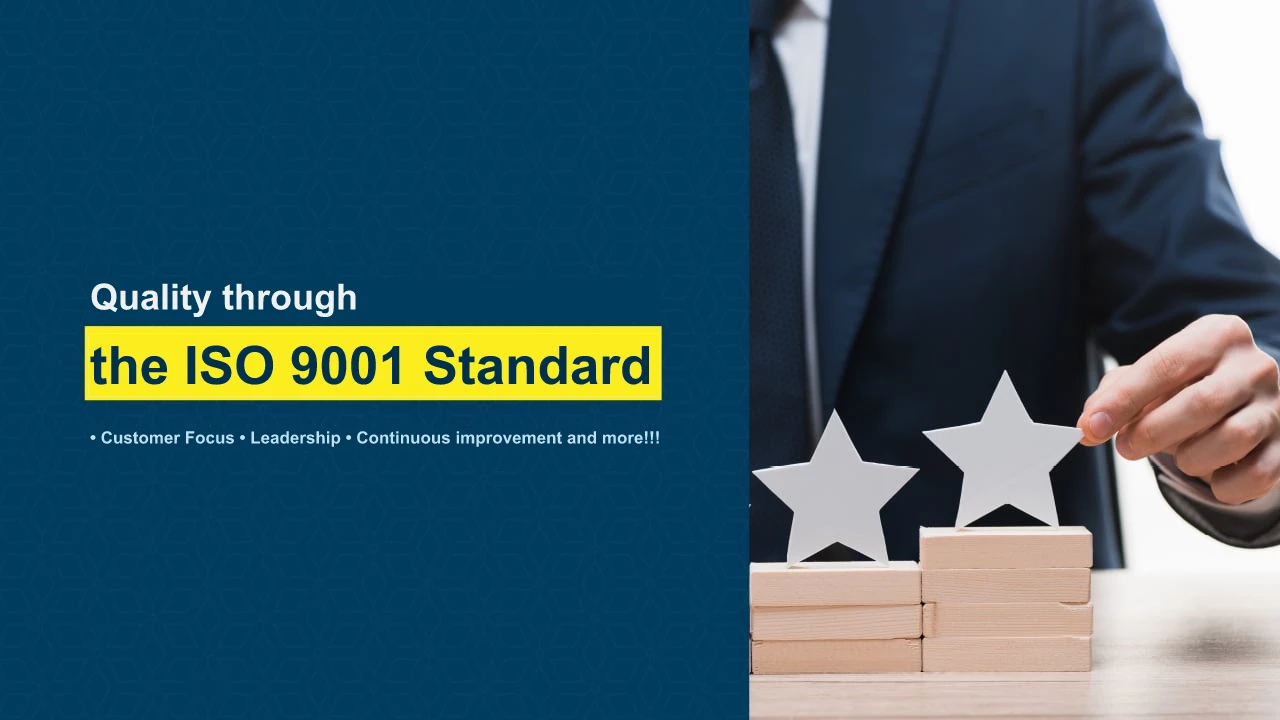
The quality management system as proposed by ISO 9001, relies on 7 principles that are:
-
- Customer Approach
- Leadership
- Engagement of People
- Approach to processes
- Continuous improvement
- Evidence-based decision-making
- Relationship management
High-level structure
Alongside these principles is a proposed management system structure known as the high-level structure. This same structure is currently being unified across the other standards and is organized as follows:
-
- Analysis of the Organization’s Context to define the scope of the quality system, strengths, weaknesses, threats, and opportunities, as well as the parties interested in maintaining quality within the organization.
- The leadership and commitment of the organization, where roles and responsibilities are clearly defined, the quality manager’s work reaches every level of the organization.
- System planning taking into account the risks and opportunities that may affect it, the organization, and its interested parties.
- The resources available to manage the system, including the material, financial, technological, and human resources needed for quality.
- The Organization's Operating in producing their products and services to ensure they meet the needs and requirements established by the customer and other interested parties.
- Performance appraisal system because what isn't measured cannot be improved
- The continuous improvement To ensure that culture is implemented in the organisation and that the proposed results are achieved.
When organizations understand that the standard is a quality management tool, they can achieve quality and maintain system certification smoothly, producing excellent results that translate into revenue and profits: a win–win project.
Remember: quality does not cost. We must embrace and maintain it to achieve organizational success and profitability.
Know ISO 39001 standards applying to road safety at: https://www.linkedin.com/pulse/reduce-la-incidencia-y-riesgo-de-muertes-/?trackingId=eXDHo6jagZVoSDuRUJTrrA%3D%3D